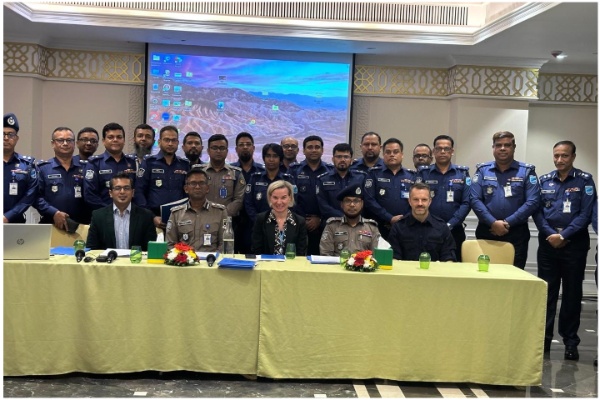
Group photograph with participating law enforcement officials and dignitaries.
Dhaka, Bangladesh/29 January 2026: As Bangladesh approaches its General Election in early February 2026, the nation is navigating a delicate phase of political transition. Ensuring public order while safeguarding democratic participation and human rights requires effective law enforcement and policing strategies. A peaceful electoral environment depends on accountable, community-responsive policing that can prevent violence, protect civic space, and enable citizens to exercise their rights free from fear or coercion.
In this context, UNODC, in partnership with the Ministry of Home Affairs and Bangladesh Police Headquarters and with support from UNDP, conducted a nationwide capacity-building programme between the final quarter of 2025 and early 2026. The initiative focused on strengthening the institutional readiness of Bangladesh Police by enhancing the leadership and operational capabilities of command-level officers.
Over 610 police officers across Bangladesh received training through operationally focused modules tailored to electoral contexts. The programme placed particular emphasis on Superintendents of Police and Officers-in-Charge, recognizing their leadership roles in enforcing laws and ensuring effective policing at divisional, district, and local levels.
Training sessions were held in Chattogram, Sylhet, Rangpur and Rajshahi led by senior officials from the Ministry of Home Affairs and Bangladesh Police. With participation from Superintendents, metropolitan police units, and Officers-in-Charge nationwide, the programme ensured unified leadership perspectives across all levels of policing.
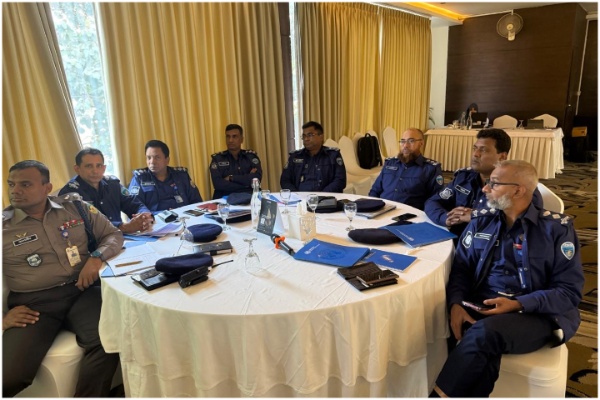
For participating officers, the trainings enhanced understanding of command responsibility, proportional use of force, accountability mechanisms, and inclusive policing during elections. Scenario-based discussions and peer exchanges enabled officers to reflect on challenges from past electoral periods, assess risks linked to misinformation and polarization, and develop practical strategies for managing public assemblies and community tensions.
Mr. M. Jashim Uddin Khan, Joint Secretary (Political – 1), Ministry of Home Affairs, Bangladesh, said, “Developed jointly by expert police officers of Bangladesh and UNODC, this training equips participants with practical skills that, when applied, will contribute directly to the election’s success. By applying the lessons learned here, we can make the upcoming election genuinely free, fair, credible, and peaceful.”
A key achievement of the initiative was strengthened institutional preparedness. Officers reported greater confidence in coordinating across agencies, engaging proactively with communities and managing incidents in ways that de-escalate tensions and prevent violence. By reinforcing human rights standards, gender sensitivity, and transparent decision-making, the programme advanced a policing approach that is both effective and trusted by the public.
These recent dialogues with key stakeholders in the country have underscored the importance of strengthening police professionalism, accountability, and operational readiness ahead of the polls.
This activity contributed to SDG 16 and SDG 17: https://sdg-tracker.org/
(Supported by UNDP)