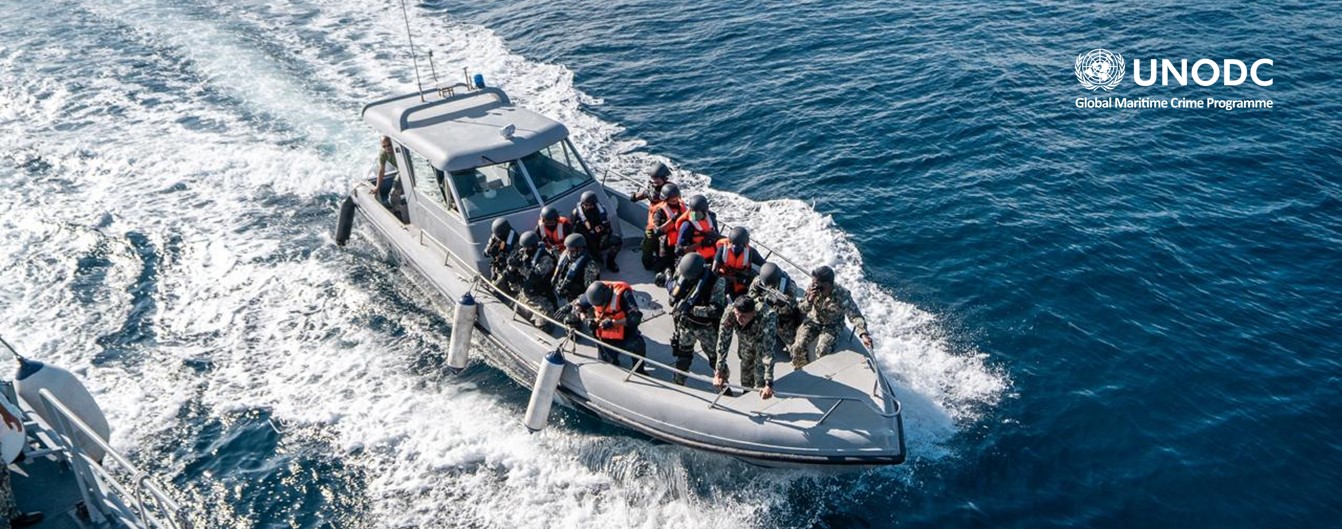
All countries, regardless of their location, depend on the safety of the oceans and waters. As confirmed by the UN Convention on the Law of the Sea, freedom of navigation is considered a vital principle of international law. Whether coastal or landlocked, states can be affected by the impact of threats posed at sea or international waters such as piracy and armed robbery, terrorism, drug trafficking and trafficking in nuclear materials and firearms, human trafficking and migrant smuggling, waste trafficking and illegal activities in the fisheries sector.
As commercial air travel decreased and land border controls increased in 2020 due to COVID-19, illicit drug trafficking on maritime and waterway routes accelerated all over the world. Against this background, UNODC works on improving the capabilities of Member States’ criminal justice systems to prevent, interdict, investigate and prosecute maritime crime, through a sound rule of law framework and effective international cooperation, as well as by the delivery of assistance through the Global Maritime Crime Programme (GMCP)
The UNODC's Global Maritime Crime Programme was established to support Member States in:
1) Law Enforcement
2) Detection/Interdiction
3) Investigation
4) Prosecution
5) Detention
6) Regional Cooperation
Working to address maritime crime and piracy supports the achievement of the Sustainable Development Goals (SDGs), specifically SDG10, SDG16, and SDG17.
 |
  |
 |