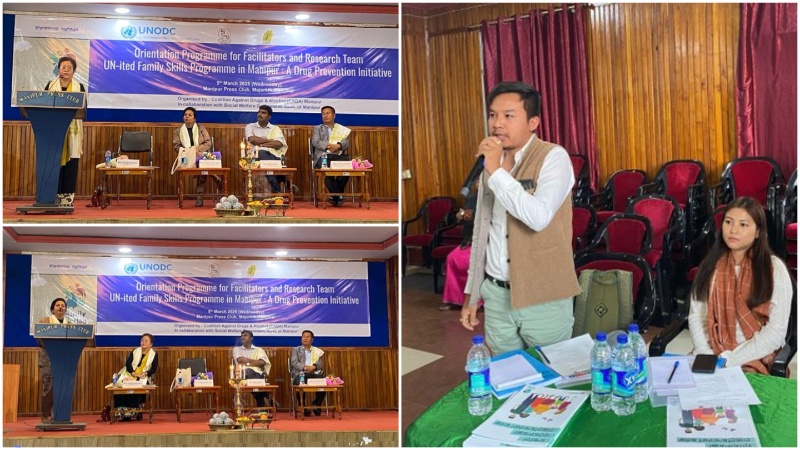
Imphal, Manipur, India/06 March 2025: Families are often a young person’s first line of defence against the many risks they may face—be it substance use, violence, or emotional distress. Recognizing the pivotal influence of the home environment, the UNODC Family United Programme is designed to strengthen family connections and build resilience from within.
At the heart of the programme is a focus on nurturing protective environments through simple yet powerful tools that encourage open communication, mutual respect, and trust between parents and children. By enhancing parenting skills and promoting healthy family routines, the initiative aims to prevent risky behaviors before they take root.
Following its launch in Guwahati last year, the programme was taken forward in Manipur, where UNODC, the Social Welfare Department of Manipur, and the Coalition Against Drugs and Alcohol (CADA) conducted a hands-on orientation for 39 facilitators, researchers, and officials. The session underscored the importance of coordinated efforts among facilitators, school authorities, researchers, and community partners.
Emphasizing the need for a holistic approach to drug use prevention, UNODC’s Seema Joshi Arya highlighted the crucial role of parents, caregivers, and family members in shaping children's attitudes and behaviors. “Through family-centered support, we can build a generation that can withstand life's challenges and contribute to a peaceful, stable society.”
Mrs. Saroja Konsam, Deputy Director of the Social Welfare Department, shared concerns about drug use and welcomed efforts to strengthen family skills. She also highlighted initiatives like the “Nisa Leitaba Manipur Semlashi” (Let’s Make a Drug-Free Manipur) campaign.
The programme focuses on enhancing parenting skills, improving communication between parents and children, and reducing risk factors that contribute to substance use. The orientation also marked the start of implementation activities, which will engage families of students aged 12 to 14—an age group considered especially vulnerable to experimentation and peer pressure.
Facilitators who were trained earlier by UNODC in Guwahati will now lead family sessions, supported by additional co-facilitators and a dedicated research team that will evaluate the programme’s outcomes.
This activity contributed to SDG 3, SDG 5 and SDG 17: https://sdg-tracker.org/