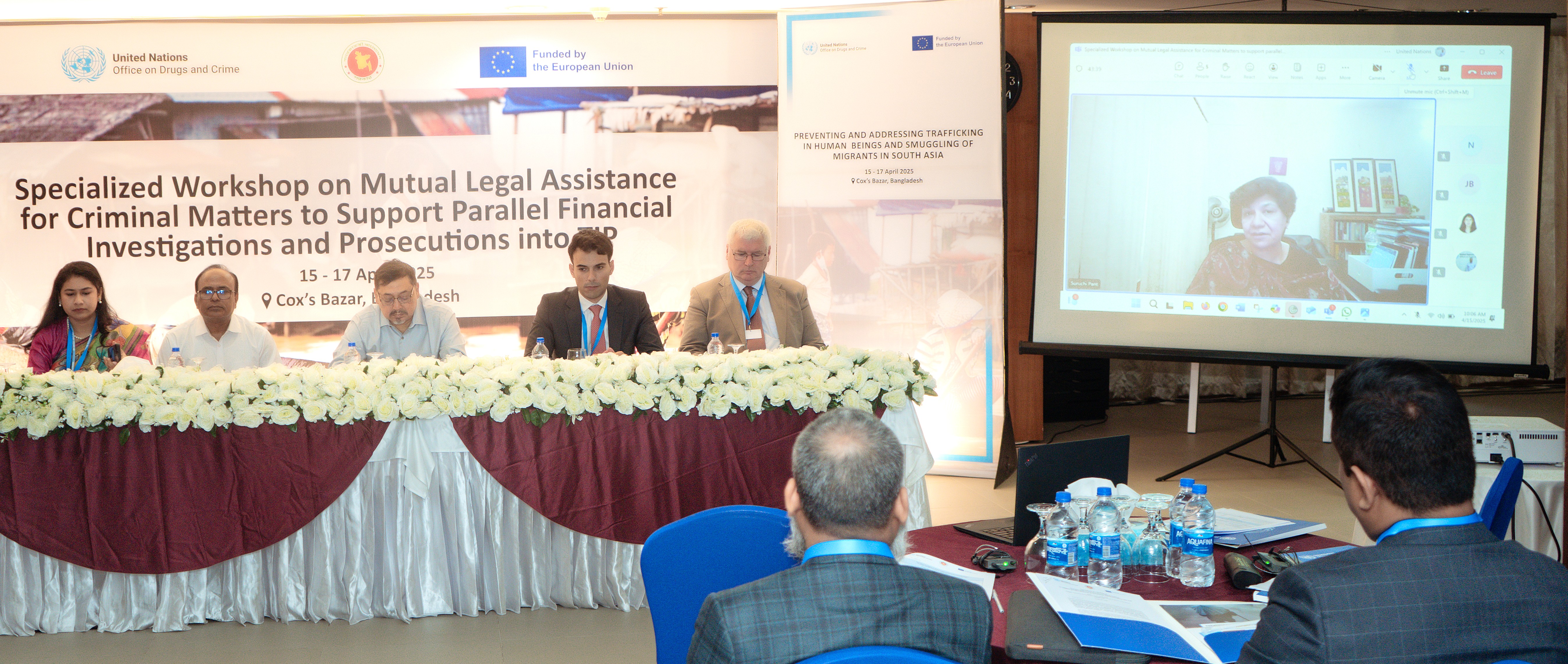
Cox’s Bazar, Bangladesh/17 April 2025: Human trafficking remains one of the most lucrative and devastating forms of transnational organized crime, exploiting vulnerable populations while generating billions in illicit profits. As traffickers increasingly use sophisticated financial systems and operate across borders, international cooperation through Mutual Legal Assistance (MLA) is vital, enabling authorities to obtain crucial evidence from foreign jurisdictions.
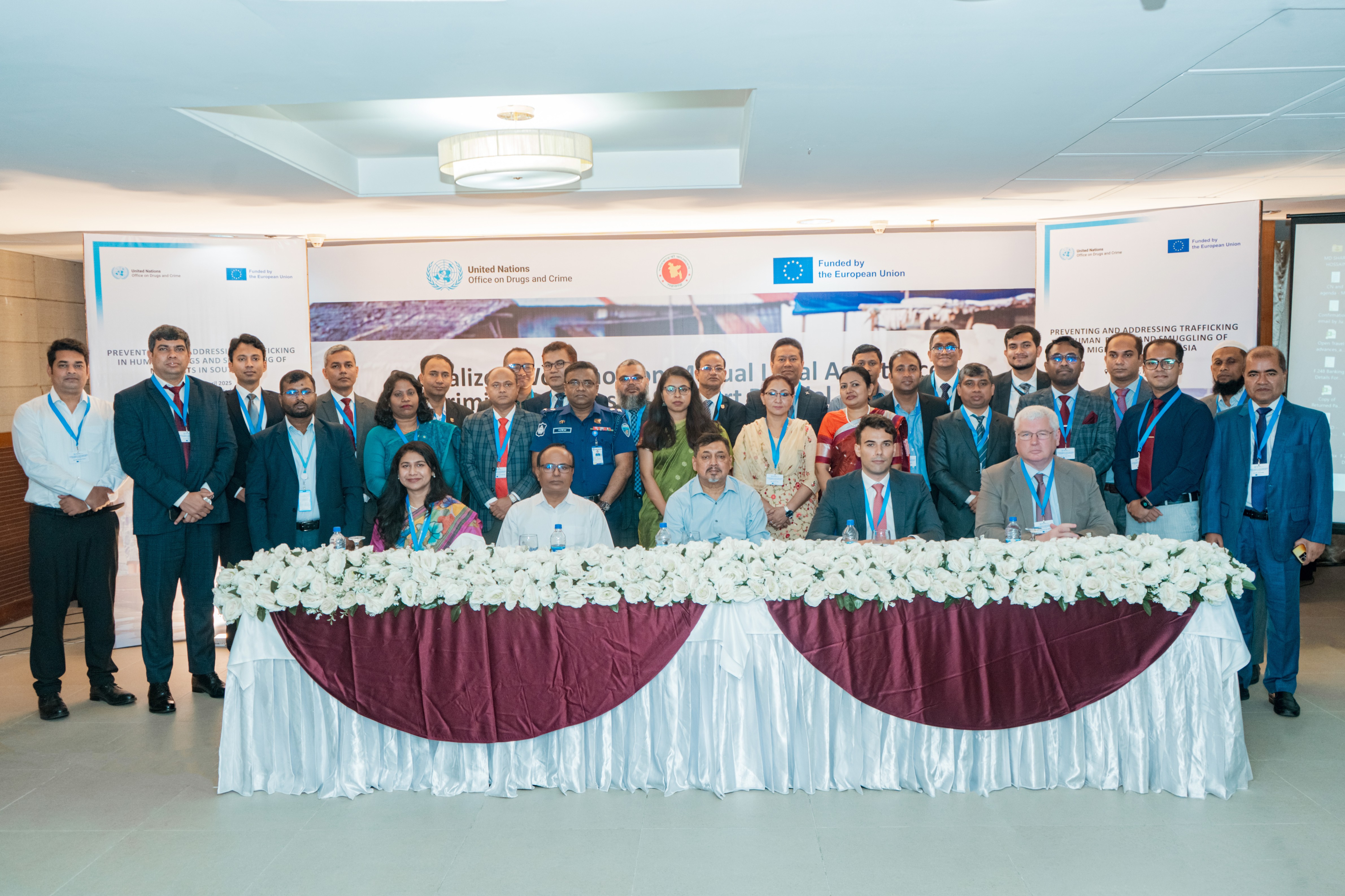
In Bangladesh, a strategic initiative by the Ministry of Home Affairs and UNODC reinforces the country’s international legal cooperation capabilities, through the formation of a dedicated national pool of Mutual Legal Assistance (MLA) experts. 25 senior officials from across criminal justice, law enforcement, foreign affairs and financial intelligence sectors were provided knowledge, tools and skills on financial investigations and prosecutions related to Trafficking in Persons (TIP) and Smuggling of Migrants (SOM). This effort, supported by the European Union, was part of a broader project on Preventing and Addressing Trafficking in Human Beings and Smuggling of Migrants in South Asia (THB-SOM).
The THB-SOM EU-funded action is implemented by UNODC in Bangladesh, Bhutan, Maldives, Nepal, and Sri Lanka. The project is aimed at strengthening cross-border legal cooperation, financial transparency, and victim-centered justice.
“Creating a robust institutional response and enabling effective MLA frameworks are essential for dismantling criminal networks and recovering illicit assets,” said Mr. Nasimul Ghani, Senior Secretary of the Ministry of Home Affairs, at the workshop’s opening ceremony. “Bangladesh remains committed to ensuring that perpetrators are brought to justice through international legal cooperation.”
“This workshop is an important step in strengthening Bangladesh’s technical and operational capacity to uphold justice and protect the vulnerable,” said Dr. Suruchi Pant, Deputy Representative for South Asia at UNODC.
Trafficking networks thrive on financial gain, often exploiting weaknesses in cross-border information sharing and utilizing formal banking systems, cryptocurrencies, and informal cash channels. While awareness and policy efforts have improved, conviction rates remain disproportionately low.
Strengthening MLA mechanisms is seen as key to reversing this trend by enabling evidence sharing, freezing assets, and coordinating prosecutions across jurisdictions.
This activity contributed to SDG 5, 8, SDG 16 and SDG 17: https://sdg-tracker.org/
(Supported by the European Union)