Himmafushi, Maldives / 12 October 2025: Recovery from conflict is not just about physical safety, but also about addressing the emotional distress caused violence, loss, and displacement and social alienation. Addressing these challenges requires specialized MHPSS that can help rebuild emotional resilience and restore pathways for reintegration into communities.
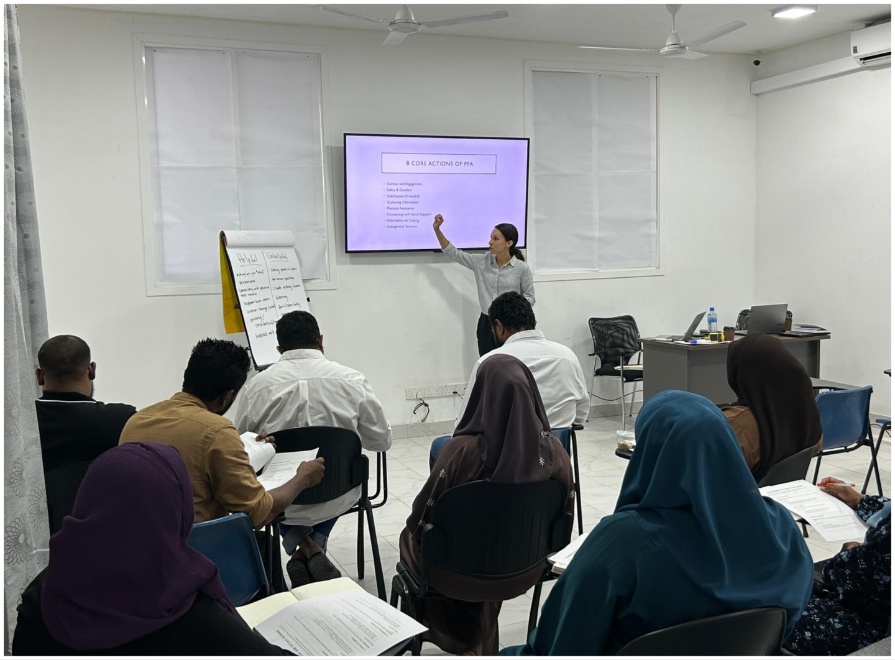
In this direction, UNODC launched a two-week capacity-building initiative in Himmafushi to strengthen trauma-informed care and rehabilitation services for returnee families associated with foreign terrorist fighters. The training equipped 18 participants (7 men and 11 women) including MHPSS practitioners, first responders, and community leaders with essential knowledge and tools to deliver trauma-informed care rooted in compassion, scientific understanding, and local context.
Implemented in partnership with the Maldivian authorities and funded by the Government of Australia, the initiative formed a key pillar of a broader national project to promote security and stability in the Maldives, particularly through support to the National Reintegration Centre (NRC). With additional families expected to return in the Maldives, the NRC faces mounting pressure to provide effective, culturally sensitive, and sustainable rehabilitation services.
The sessions focused on practical approaches such as cognitive behavioural therapy, resilience-building techniques, and stabilization methods designed to address complex trauma. Participants enhanced their ability to identify different trauma symptoms, apply suitable interventions, and determine when immediate stabilization or professional referral is required.
The initiative also fostered collaboration among local religious leaders, educators, and council members who play a pivotal role in community-based reintegration. Through group work and experiential learning, participants explored how to create safe, inclusive spaces that encourage trust, dialogue, and empathy within communities.
This initiative directly supported the implementation of UN Security Council Resolution 2396 (2017), which calls on Member States to develop comprehensive rehabilitation and reintegration strategies for returnees.
This activity contributed to SDG 5, 16 and SDG 17: https://sdg-tracker.org/
(Supported by the Australian Government)