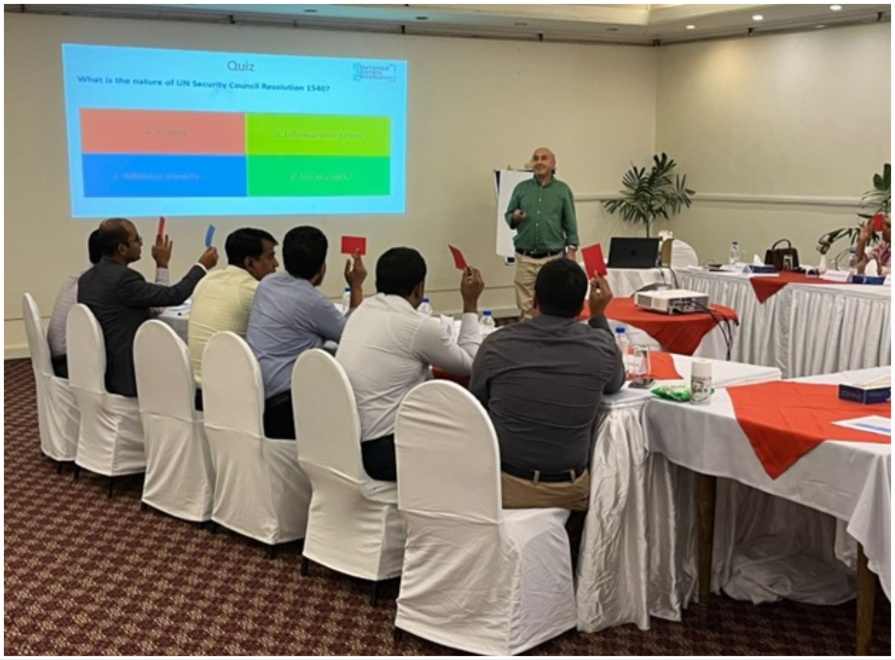
Chittagong, Bangladesh/16 October 2025: In an increasingly interconnected global economy, preventing the proliferation and misuse of sensitive goods and technologies requires strong strategic trade and enforcement frameworks. Strategic trade—the control of certain commodities for specific end uses—protects nations from security risks and upholds the integrity of international trade. Enhancing the capacities of customs and enforcement officers is therefore critical for translating policies into protection at the borders.
Recognizing this need, UNODC, through its Passenger and Cargo Control Programme (PCCP), trained 14 officers from Bangladesh Customs and the Department of Explosives in Chittagong on identifying, assessing and mitigating risks related to strategic and dual-use goods. The training, supported by the US Government under an ongoing multi-phase capacity-building cycle, delved deep into technical and operational dimensions. Using advanced modules, the sessions focused on conventional weapons, ammunition, behavioural analysis, and observational techniques, sharpening participants’ ability to identify suspicious cargo and apply control measures in real-world settings.
Participants engaged in a series of practical exercises led by regional and international experts, encompassing cargo profiling simulations and protocol development for inter-agency coordination. A field visit to Chittagong Port provided participants with practical knowledge to port operations, container specifications, and the movement of cargo. During the visit, officers analyzed container markings, seals, and documentation to identify external, internal, and document-based risk indicators, utilizing public databases for verification.
Experiences shared by the guest speaker from Sri Lanka Customs provided valuable regional context, enabling participants to connect global good practices with national realities. Group discussions also allowed officers to draft the basic components of Standard Operating Procedures (SOPs) for Port Control Units. Collaboration between Bangladesh Customs and the Department of Explosives was further strengthened, fostering a more intelligence-led and risk-based approach to export control.
This initiative reflected UNODC’s continued commitment to supporting Member States in building capacity to counter transnational organized crime. The knowledge and skills gained by participants will contribute directly to a more secure, coordinated, and resilient trade system.
This activity contributed to SDG 16 and SDG 17: https://sdg-tracker.org/
(Supported by the US Government)