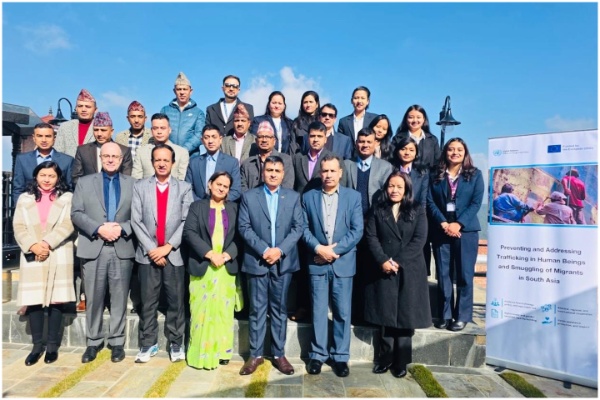
Nagarkot, Nepal/25 November 2025: In situations involving trafficking in persons (TIP) and smuggling of migrants (SOM), victims bear the heaviest burdens. Alongside the physical and psychological trauma they endure, they remain highly susceptible to intimidation, reprisals, retaliation, and social marginalization/exclusion. Placing victims’ rights at the heart of investigations and prosecutions is therefore critical, not only to uphold justice but also to empower survivors, facilitate effective legal proceedings, and support their recovery and reintegration. Yet practical challenges—such as fear of retaliation, inadequate facilities, limited legal awareness, and weak coordination among relevant stakeholders—often impede the realization of these rights.
To bridge these gaps, UNODC, in collaboration with the Office of the Attorney General, Nepal brought together 22 prosecutors and investigators from Bhaktapur, Lalitpur and Kathmandu. The workshop aimed to enhance their capacities to safeguard and uphold victims’ rights through effective judicial responses to TIP and SOM. The Hon’ble Attorney General of Nepal, the Deputy Attorney General and the Chief of the Anti-Human Trafficking Bureau graced the occasion, underscoring a strong commitment to a victim-centered approach. This initiative was conducted under the European Union-funded project, “Preventing and Addressing Trafficking in Human Beings and Smuggling of Migrants in South Asia.”
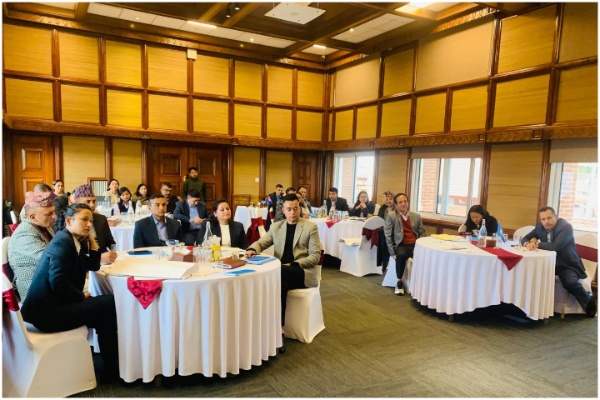
Through interactive discussions and group exercises, participants examined the key challenges surrounding victim investigation, prosecution, repatriation, and reintegration. Officials highlighted persistent concerns such as insecurity faced by victims, fear of offenders in close proximity, inadequate rehabilitation facilities, limited awareness of rights, and gaps in coordination and access to legal aid.
The workshop facilitated strategic dialogue between prosecutors and investigators, enabling participants to identify practical mechanisms to protect victims’ rights, integrate human-rights standards into procedures, and enhance coordination. Emphasis was placed on developing a dedicated Standard Operating Procedure (SOP) for TIP investigations and prosecutions, ensuring consistency and clarity in handling cases. The initiative shed light on how a victim-centered approach stands to enhance legal outcomes, supports rehabilitation, and promotes confidence in the justice system.
This activity contributed to SDG 5, SDG 16 and SDG 17: https://sdg-tracker.org/