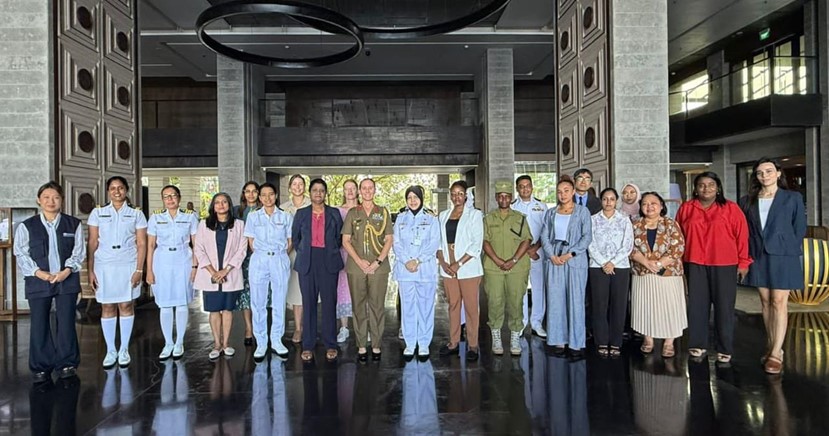
Weligama, Sri Lanka/22–23 May 2025: The UNODC Global Maritime Crime Programme (GMCP), in partnership with the Indian Ocean Rim Association (IORA), convened the UNODC–IORA Dialogue on Women in the Maritime Domain in Weligama, Sri Lanka. Held with the support of the Ministry of Foreign Affairs, Foreign Employment and Tourism, and the Sri Lanka Coast Guard, the event brought together 23 participants from 13 countries across the Indian Ocean region. The Dialogue was funded by the Governments of Australia and Japan.
Timed to align with the International Day for Women in Maritime, the event facilitated regional exchange on the challenges and opportunities linked to women’s participation and leadership in the maritime sector. Delegates included representatives from maritime law enforcement agencies, ministries, and civil society organisations.
Participants discussed persistent barriers affecting women in maritime law enforcement, including discriminatory recruitment practices, limited access to mentorship, unsafe infrastructure, and workplace harassment. While some agencies reported progress such as the adoption of equal retirement policies and increased female participation in training, such advancements were acknowledged as fragmented and often unsupported by formal policy change.
Technical sessions explored how gender considerations can be integrated into Maritime Domain Awareness (MDA), national maritime policies, and responses to trafficking in persons in the fisheries sector. Institutional gaps were also examined, particularly the absence of regulatory safeguards, informal workplace norms, and the lack of gender-sensitive monitoring systems.
Participants called for revisiting national regulations and internal procedures through gender impact assessments. Discussions emphasised the need for clearly mandated gender focal points within agencies, reform of recruitment and promotion processes to address bias, and the establishment of mentorship and sponsorship mechanisms. The Dialogue also highlighted the importance of investing in gender-sensitive infrastructure, improving operational safety, and integrating sex-disaggregated data and gender-responsive indicators into MDA and enforcement systems.
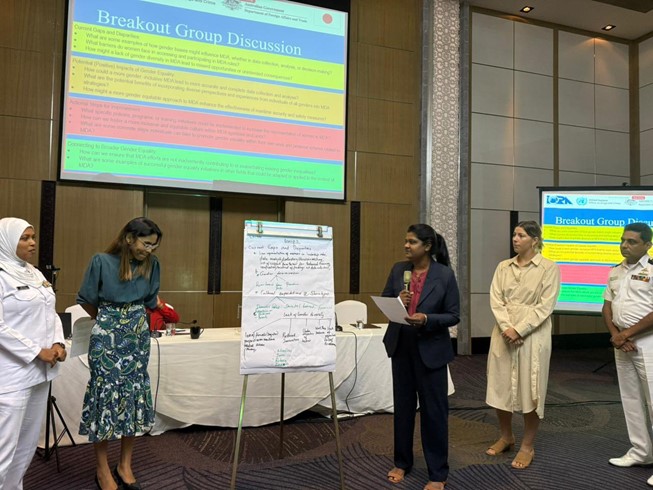
Breakout discussions provided space for participants to share national practices and propose practical steps to strengthen gender inclusion. These included improvements to harassment reporting mechanisms, creation of regional peer support networks, and the development of inclusive standard operating procedures. There was strong consensus on the need for dedicated resources, institutional follow-through, and technical guidance to sustain change.
The event concluded with several agencies expressing interest in partnering with UNODC to pursue tailored reforms and strengthen national frameworks for gender mainstreaming in maritime law enforcement.
UNODC GMCP acknowledges the Government of Sri Lanka as the chair of IORA for hosting the Dialogue and extends its appreciation to the Governments of Australia and Japan for their continued support in advancing inclusive maritime governance across the Indian Ocean region.