Kathmandu, Nepal/15 May 2025: As patterns of human trafficking grow more complex and transnational, the need to place survivors at the heart of anti-trafficking efforts is an imperative. Ensuring that laws reflect the lived realities of victims—particularly in the context of labour migration, exploitation, and abuse—is key to delivering justice and protection.
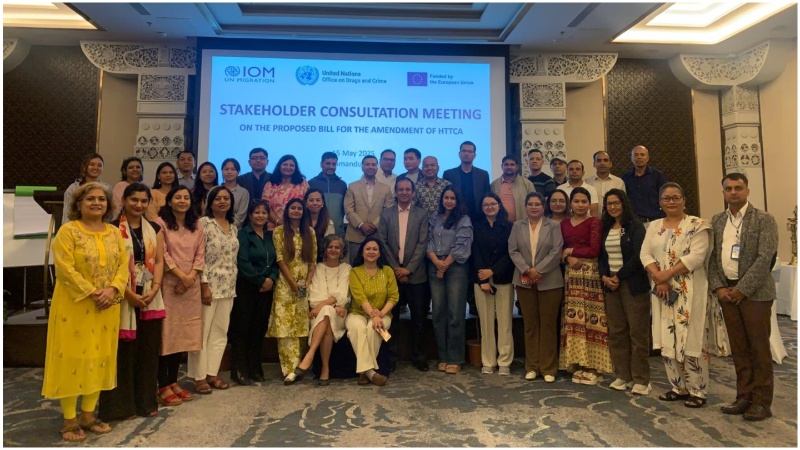
Reflecting on this, 50 civil society stakeholders discussed proposed amendments to the Human Trafficking and Transportation (Control) Act (HTTCA), at a high-level consultation convened by UNODC in collaboration with IOM. The discussions emphasized the importance of aligning the national legal framework with the Palermo Protocol and ensuring that the law addresses the realities of labour migration and emerging trends in human trafficking.
The dialogue focused on draft amendments to the HTTCA, currently registered in the Nepal parliament as a bill, and built consensus around a more victim-responsive framework.
Key proposed reforms include the replacement of the term jabarjati shram (coerced labour) with badhyakari shram (forced labour), and an expanded definition of exploitation to include sexual and labour-based abuses. Importantly, the draft also introduces a legal definition of human smuggling and broadens jurisdiction to cover trafficking into Nepal—not just from it.
The draft amendments also assign the Anti-Human Trafficking Bureau the responsibility to rescue trafficked individuals abroad. The recruitment of police attachés to facilitate the identification and rescue of trafficking victims is also proposed. Other proposed amendments include interim compensation to victims based on factors such as economic status and family circumstances, special consideration for women and children during rescue, repatriation, and protection, and child sensitive rescue measures.
UNODC National Programme Coordinator Ms. Reena Pathak commended the drafting committee for developing comprehensive revisions that reflect the country’s commitment to countering trafficking in persons.
By aligning with the Palermo Protocol and prioritizing survivor protection and justice, the proposed amendments stand to modernize Nepal’s anti-trafficking legislation. The consultation built civil society momentum and consensus, reinforcing a shared commitment to human rights, regional cooperation, and effective victim-centered responses to trafficking in persons.
This activity contributed to SDG 5, SDG 16 and SDG 17: https://sdg-tracker.org/