New Delhi, India/ 31 May 2025: Young people in India face serious risks from tobacco, drugs and related vulnerabilities that threaten their health and well-being. According to the Global Youth Tobacco Survey (GYTS) conducted in India in 2019, nearly 14% of students aged 13–15 use some form of tobacco. The 2019 National Survey on Extent and Pattern of Substance Use in India, conducted by the Government of India, further revealed that among children aged 10–17, 1.3% use alcohol, 8.5% use tobacco (with 7.3% smoking cigarettes), 0.9% consume cannabis, 1.8% opioids, and 1.17% inhalants. UNODC has also flagged the global prevalence of substance use among young people, underscoring the urgent need for effective prevention efforts.
Advocating holistic educational responses to address substance use among young learners, the Ministry of Education, Government of India convened a vital national dialogue on school health and wellness—bringing together officials from the National Council of Educational Research and Training (NCERT), Central Board of Secondary Education (CBSE), Narcotics Control Bureau, state nodal officers, educators and UNODC.
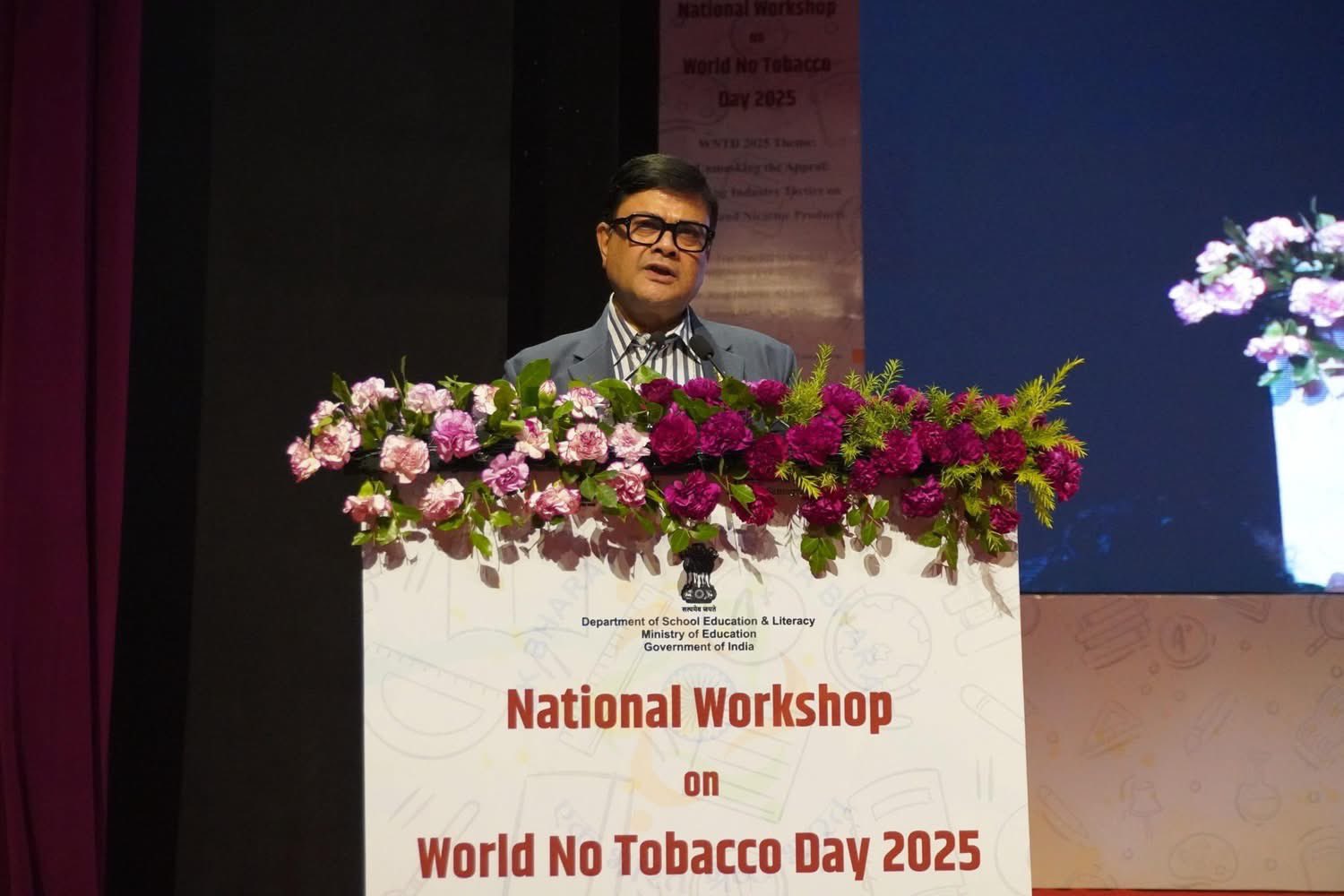
Mr. Sanjay Kumar, Secretary of the Department of School Education and Literacy, launched a nationwide school challenge under the Tobacco-Free Educational Institutions (ToFEI) framework. This initiative aims to create tobacco-free, health-focused learning environments and promote student well-being across the country.
Mr. Kumar also appealed to schools to proactively raise awareness through School Management Committee (SMC) meetings, ensuring that parents and local communities are fully informed and involved in the movement towards ensuring tobacco-free schools.
Extending support to India’s ToFEI framework, UNODC presented a range of global and national educational tools and prevention responses. These included the joint UNESCO-WHO-UNODC Compendium on Good Policy and Practice in Health Education, the Listen First campaign focused on evidence-based prevention, the RiseUp4Peace initiative, the Family Skills programme to strengthen parenting and communication and CHAMPS, a youth-centered model for positive peer engagement.
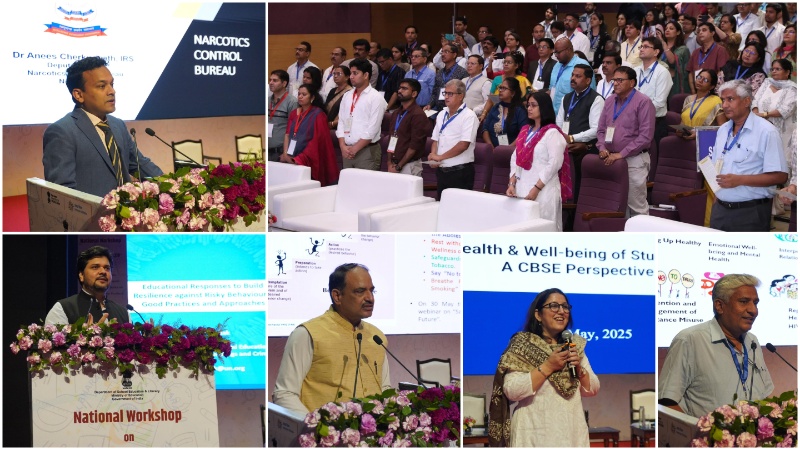
UNODC also shared key grassroots insights into the cross-cutting nature of vulnerabilities students face—including substance use, cyber risks, peer pressure and mental health challenges. Drawing from the RiseUp4Peace initiative, UNODC’s Communications Officer for South Asia Mr. Samarth Pathak showcased how schools can act as ‘action hubs,’ integrating prevention into classrooms through teacher training, student co-creation, mentorship, and projects. With these, schools can work towards building resilience and empower young people to confront these challenges head-on.
Representatives from the NCERT, CBSE, NCB and state education departments enriched the dialogue by sharing good practices and practical strategies, emphasizing the critical need to transform policy into effective action.
With strong leadership from the Ministry of Education and collaborative efforts across agencies, India is making important progress to protect youth through education-driven prevention and wellness initiatives.
This activity contributed to SDG 3, SDG 4, SDG 16 and SDG 17: https://sdg-tracker.org/