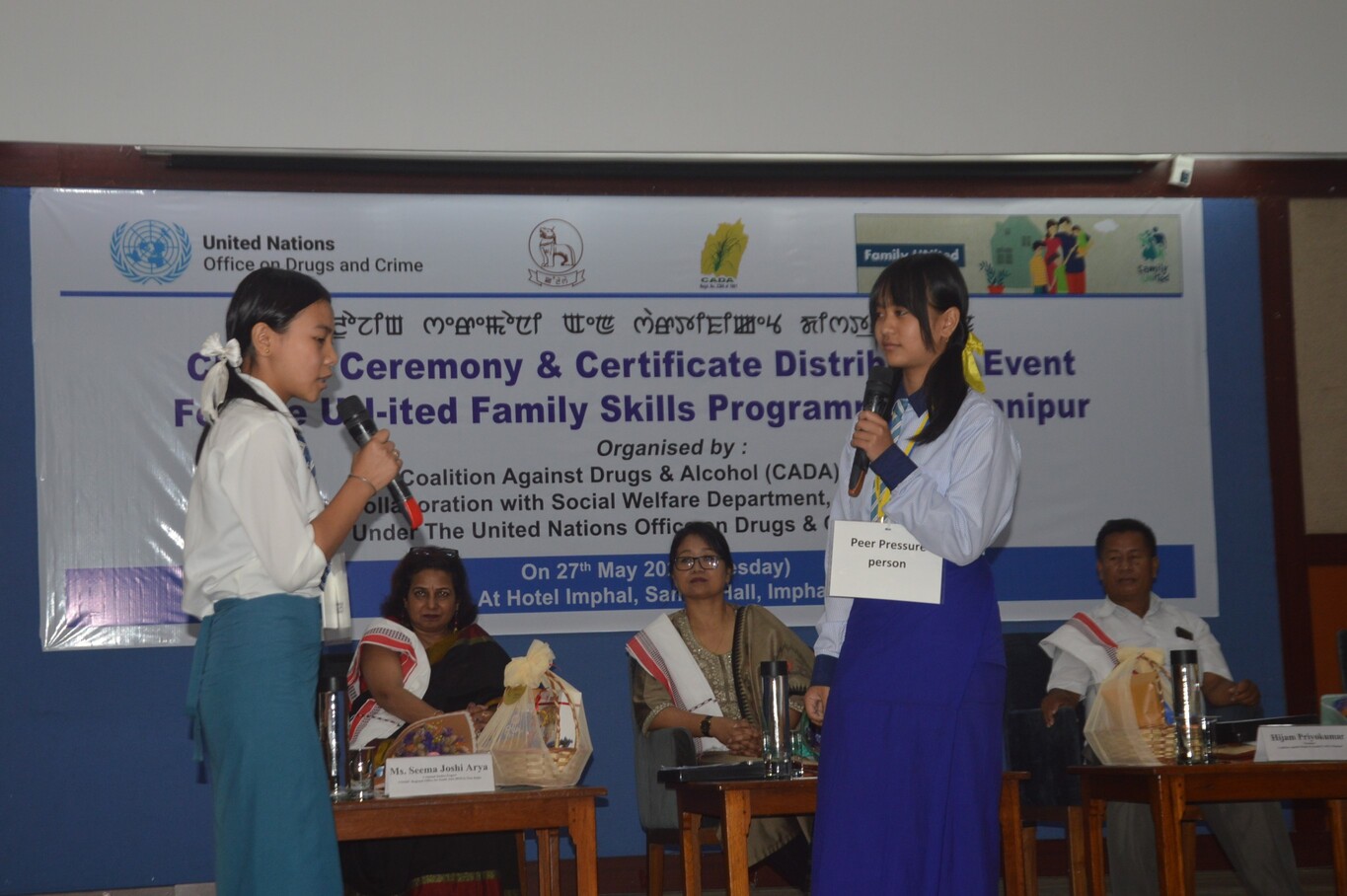
Imphal, Manipur, India/27 May 2025: “Earlier, I thought they just scolded me because they didn’t like me. Now I know they love me—they just didn’t know how to show it.”
When 13-year-old Rajini from Wangkhei Model High School in Imphal stood up to say these words, there was a moment of silence in the room. Then came the applause, as parents and children, sitting side by side, smiled. Over four weeks, they had opened up to each other in ways many never had before—finding space to talk honestly, reflect on shared challenges, and rebuild trust that had eroded silently over the years.
In May 2025, fifty families in Imphal took part in UNODC’s UN-ited Family Skills Programme, implemented at the Wangkhei Model High School in partnership with the Coalition Against Drugs and Alcohol (CADA) and the Social Welfare Department, Government of Manipur.
Designed to strengthen parenting and communication skills, the programme brought together adolescents and their caregivers in joint sessions—fostering connection, empathy, and understanding at a time when many families are struggling to navigate modern pressures and the growing risk of substance use among youth.
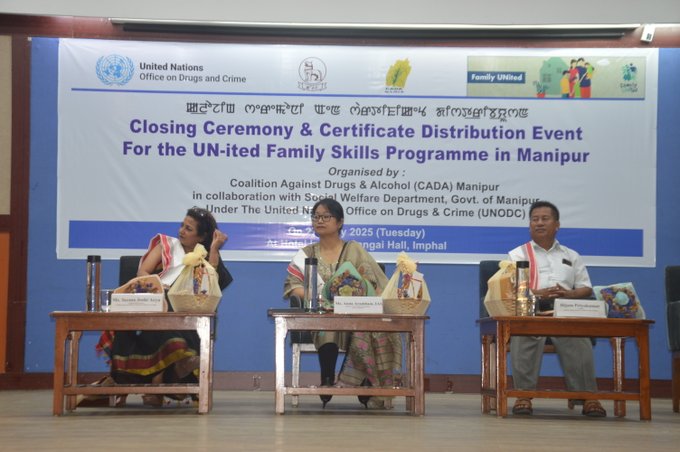
Over 170 participants—government officials, educators, caregivers, children, youth, and media—joined the culmination of the pilot, marked by testimonials, performances, and appeals to expand the initiative.
“Families are the first line of defence against risky behaviours,” said Ms. Anna Arambam, IAS, Director of the Social Welfare Department. “This programme bridges gaps and nurtures resilience.”
Facilitators shared how the sessions transformed hesitant, closed-off families into cohesive, communicative units. “It gave families tools to cope with stress,” one said. A parent added, “I learnt how to rebuild trust with my teenage daughter after years of silence,” she shared.
The programme also gave children the tools to handle real-life challenges. Lousingleiba, a student, reflected, “I learned how to be assertive without being aggressive. It helped me deal with peer pressure and made me feel closer to my family.”
Delivered through storytelling, role-plays, and group discussions, the sessions empowered families to tackle the root causes of youth vulnerability.
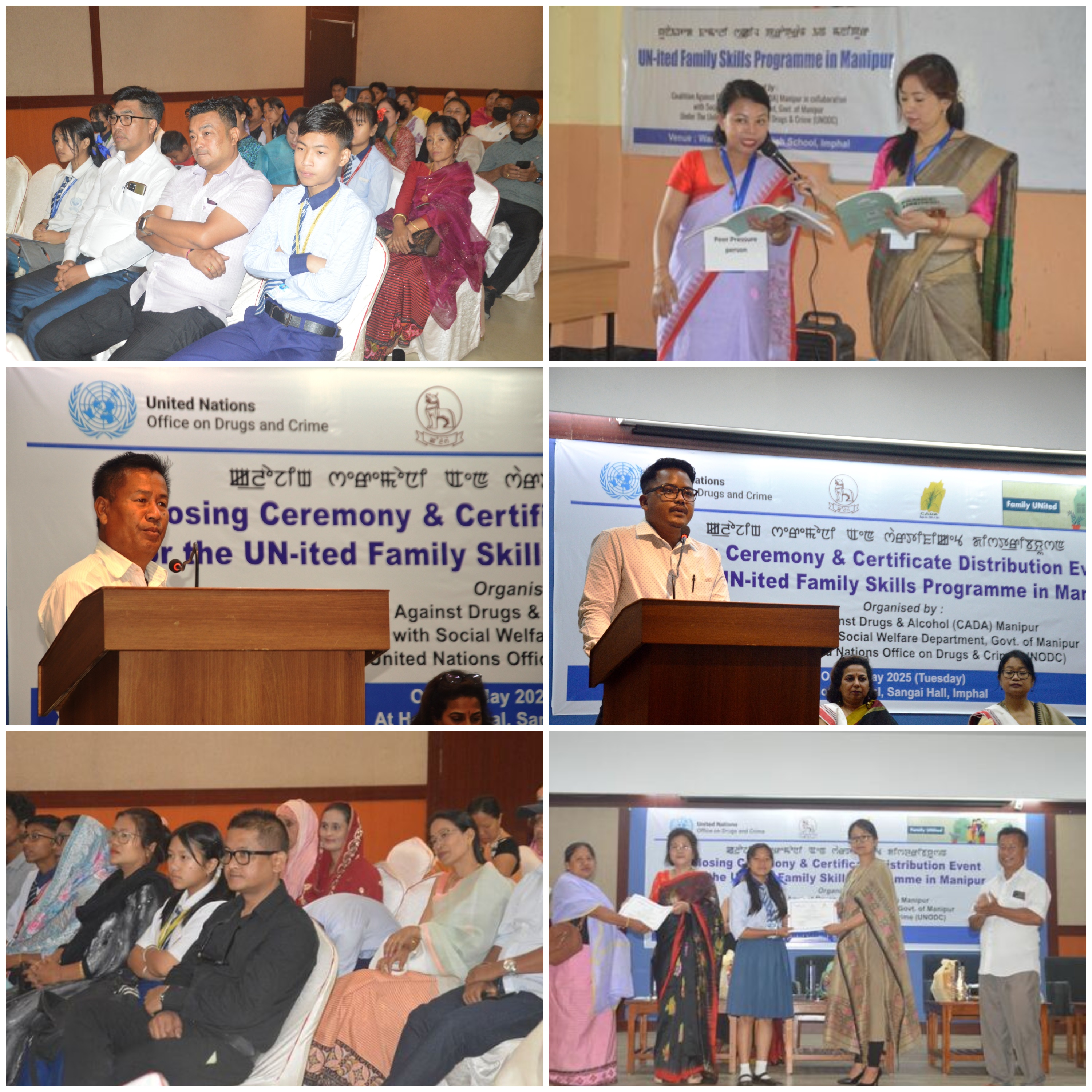
Mr. Hijam Priyokumar, President of CADA, emphasized the urgency of scaling up the initiative across Manipur. “We now have a community of trained facilitators, engaged parents, and hopeful youth. The time is ripe to take this further.”
Ms. Seema Joshi Arya, Criminal Justice Expert at UNODC South Asia, underscored the programme’s strategic approach. “Prevention is a key pillar of UNODC’s comprehensive framework addressing drug demand, supply, and harm. Family-based interventions, such as this one, are grounded in evidence and global best practices.”
This activity contributed to SDG 3, SDG 16 and SDG 17: https://sdg-tracker.org/
(Supported by Government of Sweden)