Khulna and Dhaka, Bangladesh/24 June 2025: Community and beat policing form an essential strategy in countering extremist narratives before they take root. By mainstreaming trust-building, dialogue and human rights, this approach encourages frontline law enforcement officers to become partners in peace, engaging with citizens, identifying early warning signs, and addressing grievances before they escalate.
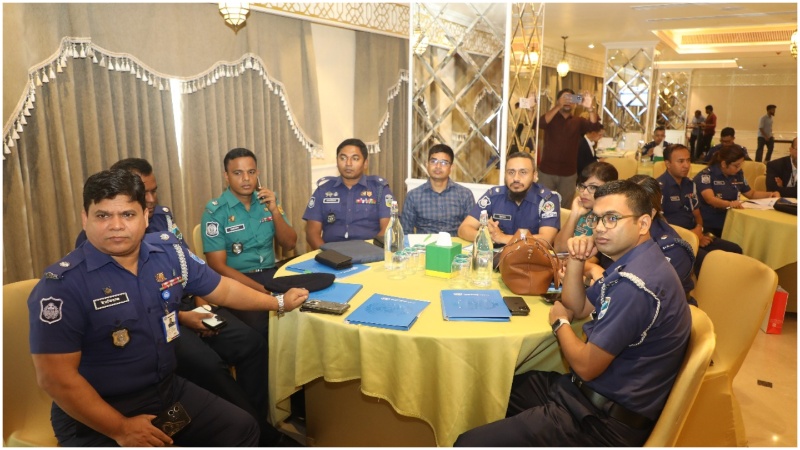
In this direction, the United Nations Office on Drugs and Crime (UNODC) Regional Office for South Asia--and the UNODC Crime Prevention and Criminal Justice Section and the Terrorism Prevention Branch--in collaboration with the Anti-Terrorism Unit (ATU) of the Bangladesh Police, equipped 100 police officers with knowledge and skills to strengthen community and beat policing mechanisms and strategies.
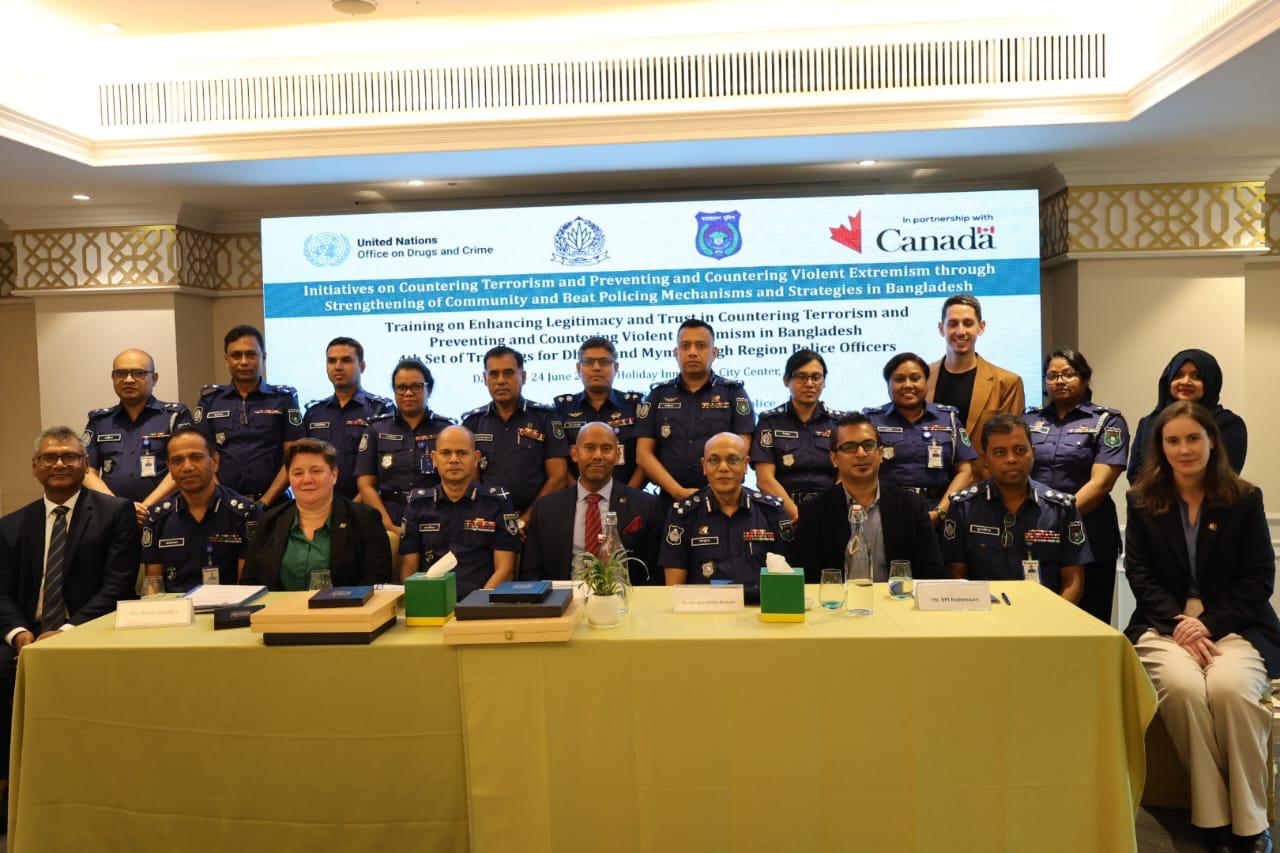
Conducted under the framework of the “Initiatives on Countering Terrorism and Preventing and Countering Violent Extremism through Strengthening of Community and Beat Policing Mechanisms and Strategies in Bangladesh,” with generous support from the Global Affairs Canada, two 3-day training sessions were held for unit-level supervisors police officers from the Khulna, Barishal, Dhaka, and Mymensingh regions. These marked the conclusion of the final phase of a national training-of-trainers (ToT) series.
Participants included District Counter-terrorism Officers, members of the ATU, Range Police, and Metropolitan Police. The training built the capacity of supervisory officers to lead and cascade practical knowledge and skills in their local units, particularly to beat and community police personnel.
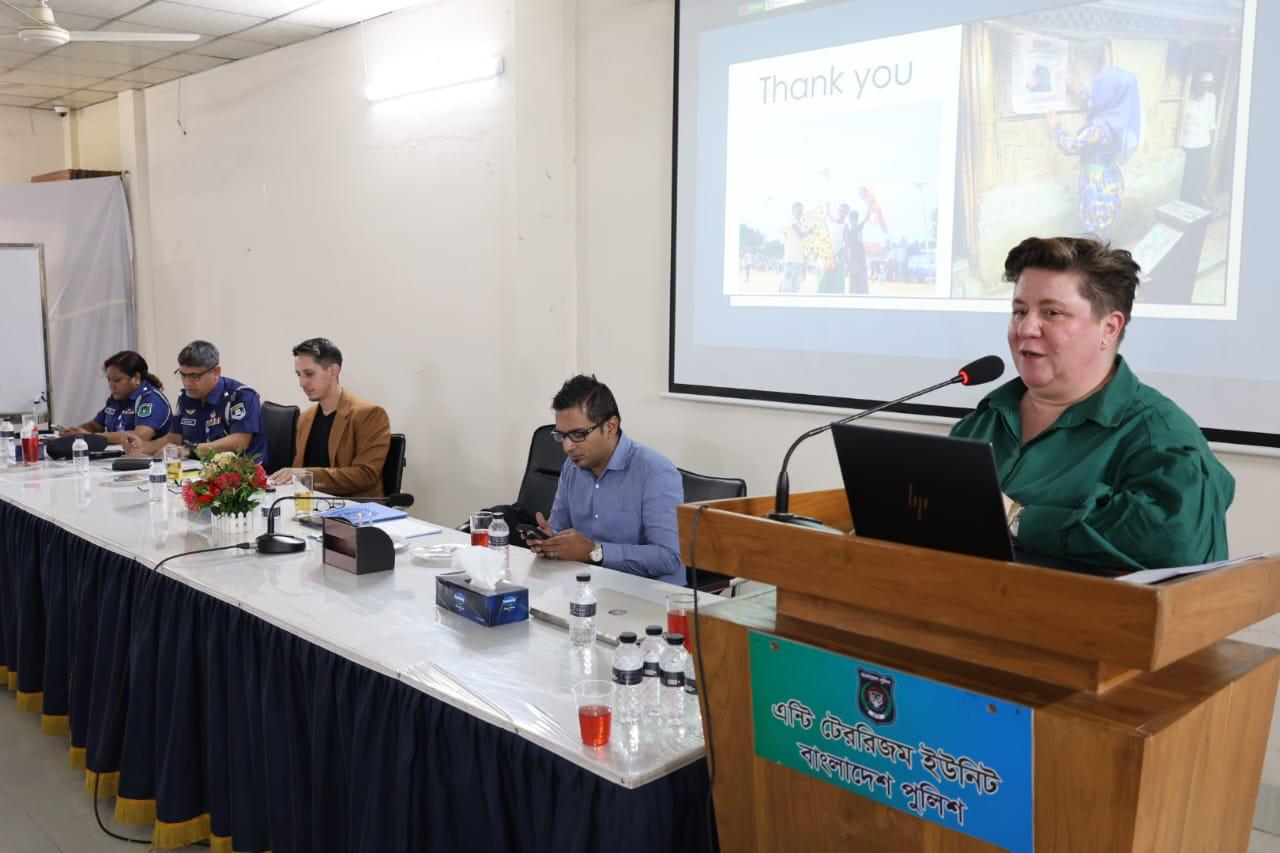
“We now understand how to prevent violent extremism proactively and how to strengthen our community ties. Our next step is to transfer this knowledge to beat officers and ensure it becomes part of our daily work,” a participant said.
The series was informed by an initial nationwide technical needs assessment, which included consultations with police officers and international experts. Based on this, UNODC and the ATU developed targeted training modules to address identified gaps, including theory of terrorism prevention, strategies for early prevention of violent extremism and the implementation of human rights-based, gender-sensitive and community-oriented policing practices.
Closing Ceremony and Reflections
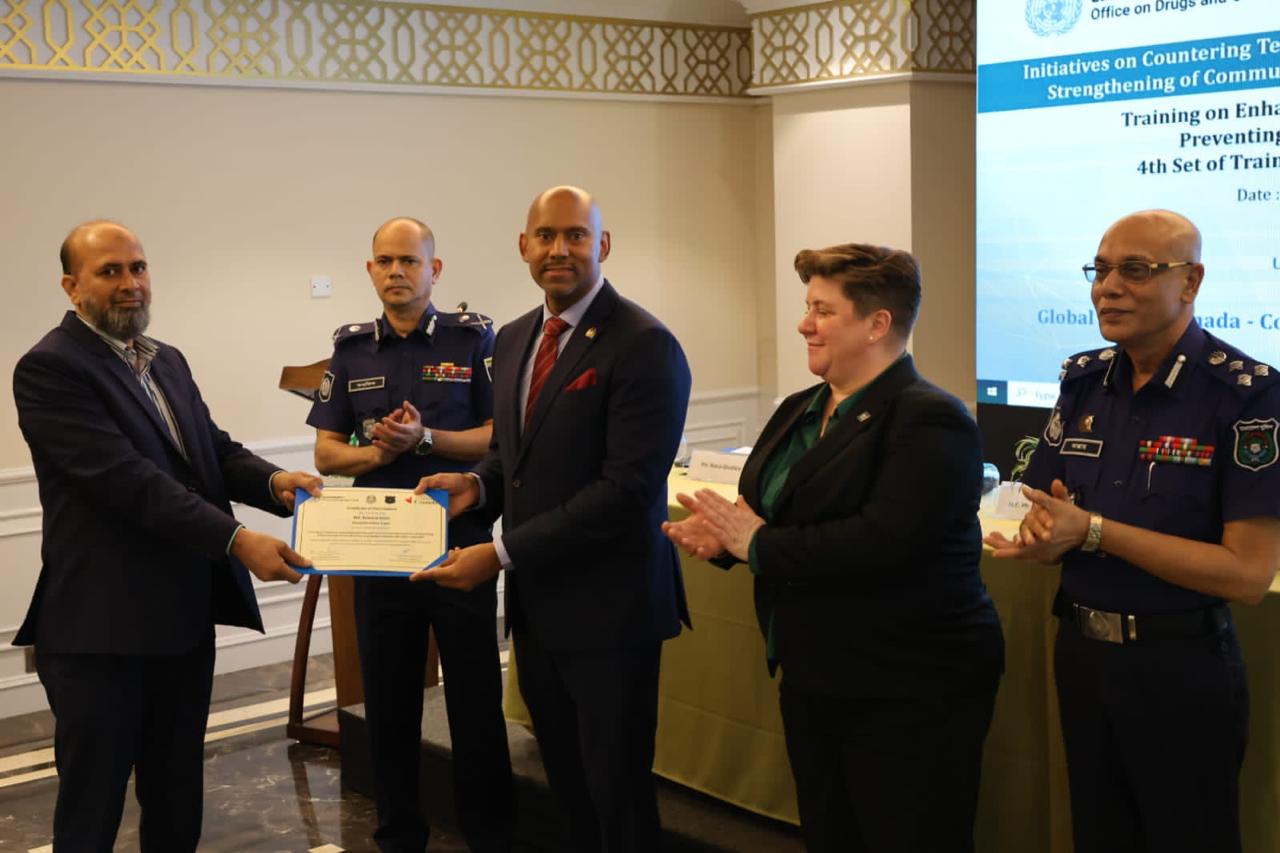
The final training concluded with a formal certificate distribution ceremony, attended by H.E. Mr. Ajit Singh, Honourable High Commissioner of Canada in Bangladesh; Mr. Tawfique Mahbub Chowdhury, Additional Inspector General of Police (Development), Police Headquarters; Dr. Md. Akkas Uddin Bhuiyan, DIG (Training & Research), ATU; Ms. Anna Giudice, Team Leader – Access to Justice, UNODC HQ Vienna; and Mr. SM Naheeaan, National Programme Coordinator, UNODC.
“This programme represents a milestone in our collective mission to build a safer, more resilient Bangladesh. The strategies you have learned here—building trust, fostering community relations, and integrating procedural justice—are the foundation of a policing model that can prevent the spread of violent extremism,” said Mr. Chowdhury.
Looking Ahead
The close of this phase transitions the project into its implementation stage at the local level. UNODC and ATU plan to pilot district-level rollouts, adapt the training into the national police training curriculum, and collaborate with institutions such as the Police Staff College and Police Academy in Rajshahi.
Additionally, efforts are underway to revise Bangladesh’s 2010 Community Policing Strategy to reflect current realities and incorporate new research. A communication strategy is under development to support officers in engaging communities effectively and consistently.
Through this initiative, UNODC and its partners aim to advance policing models that are based on transparency, institutional legitimacy, and meaningful engagement with communities.
For resources on police reform, professionalisation or modernisation, consult: UNODC Police Reform
This activity contributed to SDG 16 and SDG 17: https://sdg-tracker.org/
(Supported by Global Affairs Canada)