Dhaka, Bangladesh/22 July 2025: In the wake of emerging public health and social challenges linked to drug use, HIV/AIDS, and gender-based violence, the role of law enforcement goes far beyond maintaining law and order. Equipping police personnel with awareness on human rights, stigma, and the unique vulnerabilities of key populations, such as people who use drugs, sex workers, transgenders and men who have sex with men (MSM), is a crucial step in building safer, healthier and inclusive societies.
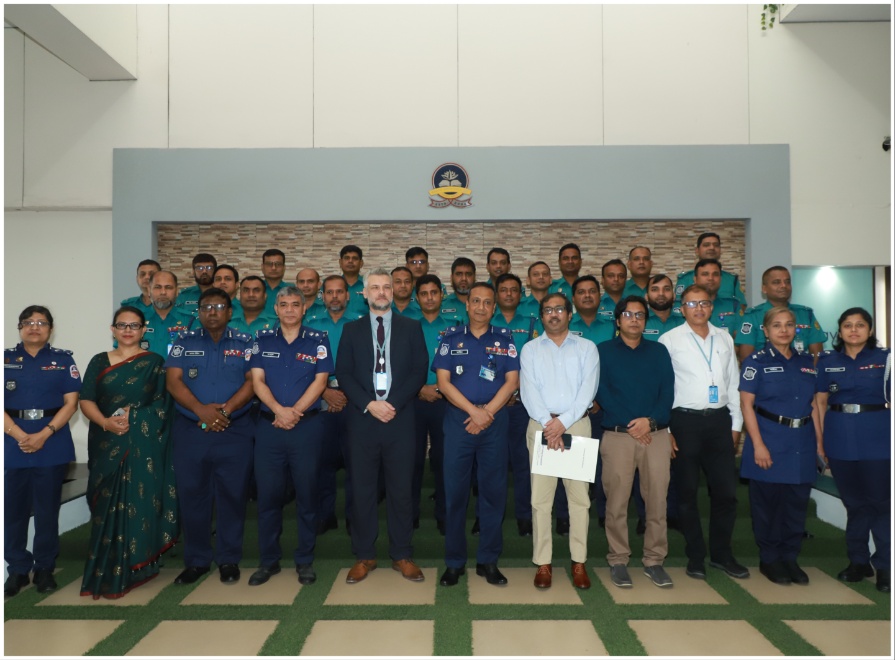
Recognizing this need, 25 police inspectors of the Dhaka Metropolitan Police were equipped with knowledge, skills and tools through a UNODC training covering drugs and HIV/AIDS, human rights, and gender-based violence. The capacity building program focused on supporting national efforts to prevent HIV transmission and reduce harm among key populations.
This initiative improved participants’ technical knowledge of drug-related risks and HIV prevention and provided a platform to discuss sensitive issues with empathy and understanding. A key highlight of the training was a candid dialogue between police inspectors and representatives from key populations. This open dialogue offered first-hand insights into the social realities, stigma, and abuse that marginalized groups often face, many of which stem from institutional barriers. “This is the first time we have listened to the inhuman stories of key populations and understood the social causes behind drug addiction,” an inspector shared during a reflection session. “We will apply a more human approach in our work going forward.”
The impact was clear. Participants expressed a strong commitment to apply their newly acquired knowledge in daily practice, particularly while engaging with stakeholders and key populations. They pledged to combat harassment, improve access to services, and uphold the rights of all citizens—especially those most vulnerable.
“Law enforcement agencies should proactively involve stakeholders to control drug abuse and HIV transmission among key populations,” emphasized the Additional Inspector General of Police at Bangladesh Staff College.
As Bangladesh continues to scale its national HIV/AIDS programme, such training is a vital part of creating an enabling environment for health and justice. By sensitizing police officers to the human side of drug use and HIV, and by equipping them with the tools to act with compassion and fairness, this initiative marks a meaningful step towards inclusive policing and stronger community resilience.
This activity contributed to SDG 16 and SDG 17: https://sdg-tracker.org/
(Supported by UBRAF)