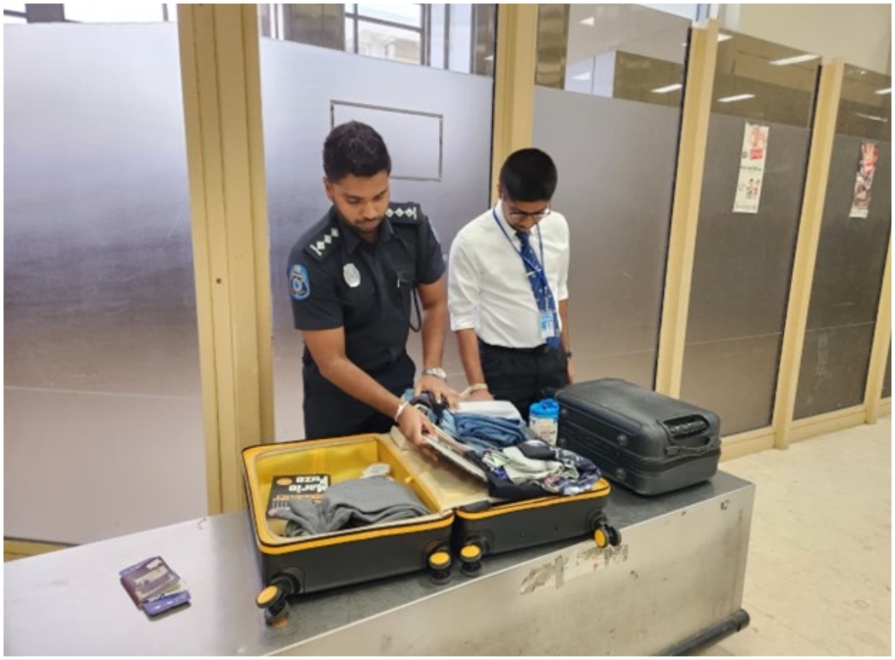
Colombo, Sri Lanka/29 August 2025: Criminal networks are constantly finding new ways to exploit busy airports. For Sri Lanka, a key hub in South Asia, this challenge makes passenger targeting a vital part of keeping borders safe. Building detection and identification skills among airport and law enforcement officials is central to countering drug trafficking and other cross-border crimes.
To strengthen this frontline defense, UNODC, under its Passenger and Cargo Control Programme (PCCP), trained 21 customs and immigration officers from Sri Lanka through an intensive capacity boosting effort on identifying high-risk passengers without slowing down the flow of legitimate travel.
The training, combined intensive discussions and on-the-ground experience to provide officers with both technical know-how and confidence to apply techniques and skills under pressure.
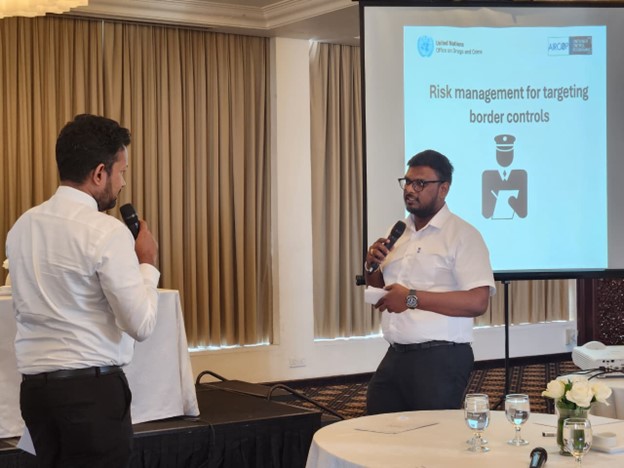
The training unfolded in two parts. In the first phase, officers dived into passenger data analysis, behavioral indicators, and structured risk assessment to think critically and move beyond surface-level checks. In the second, they stepped into the Bandaranaike International Airport, working side by side on live operations, practicing interviews, baggage inspections, and document verification in real time.
Officers from different agencies worked together, exchanged insights, and built professional networks. This spirit of cooperation is essential in tackling trafficking and organized crime.
This activity contributed to SDG 16 and SDG 17: https://sdg-tracker.org/
(Supported by the United States Government)