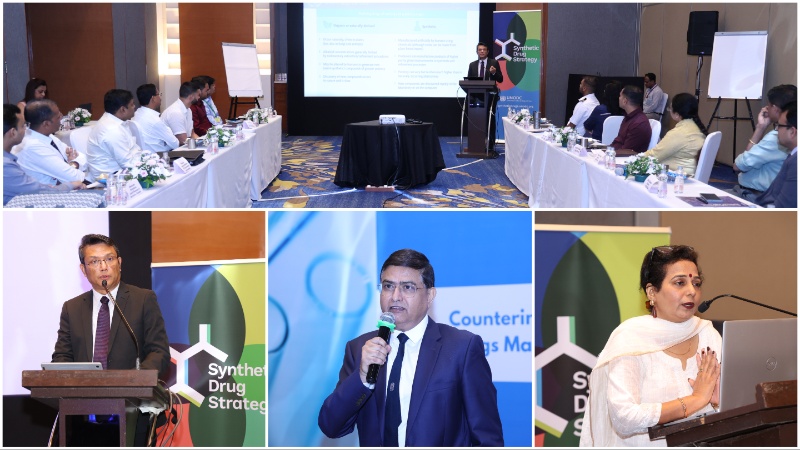
Ahmedabad, Gujarat and Mumbai, Maharashtra, India/29 August 2025: Synthetic drugs have transformed the challenge of drug control into one of the most urgent threats to law enforcement and public health worldwide, as evident in the emergence of new routes and manufacturing areas and increasing linkages with transnational organized crime groups. According to UNODC, the global synthetic drug market now counts more than 1,340 new psychoactive substances. Trafficking of synthetic drugs and precursors from South Asia, specifically India, to Europe has also intensified in recent years.
For countries like India, the stakes are especially high, owing to its vast pharmaceutical and chemical industry, making regional collaboration and smarter policing strategies imperative. India has emerged as a prominent source of synthetic cathinones seized in Europe since 2019. In addition, along with China, India has also been identified as a point of departure of cathinone precursors seized in Europe.
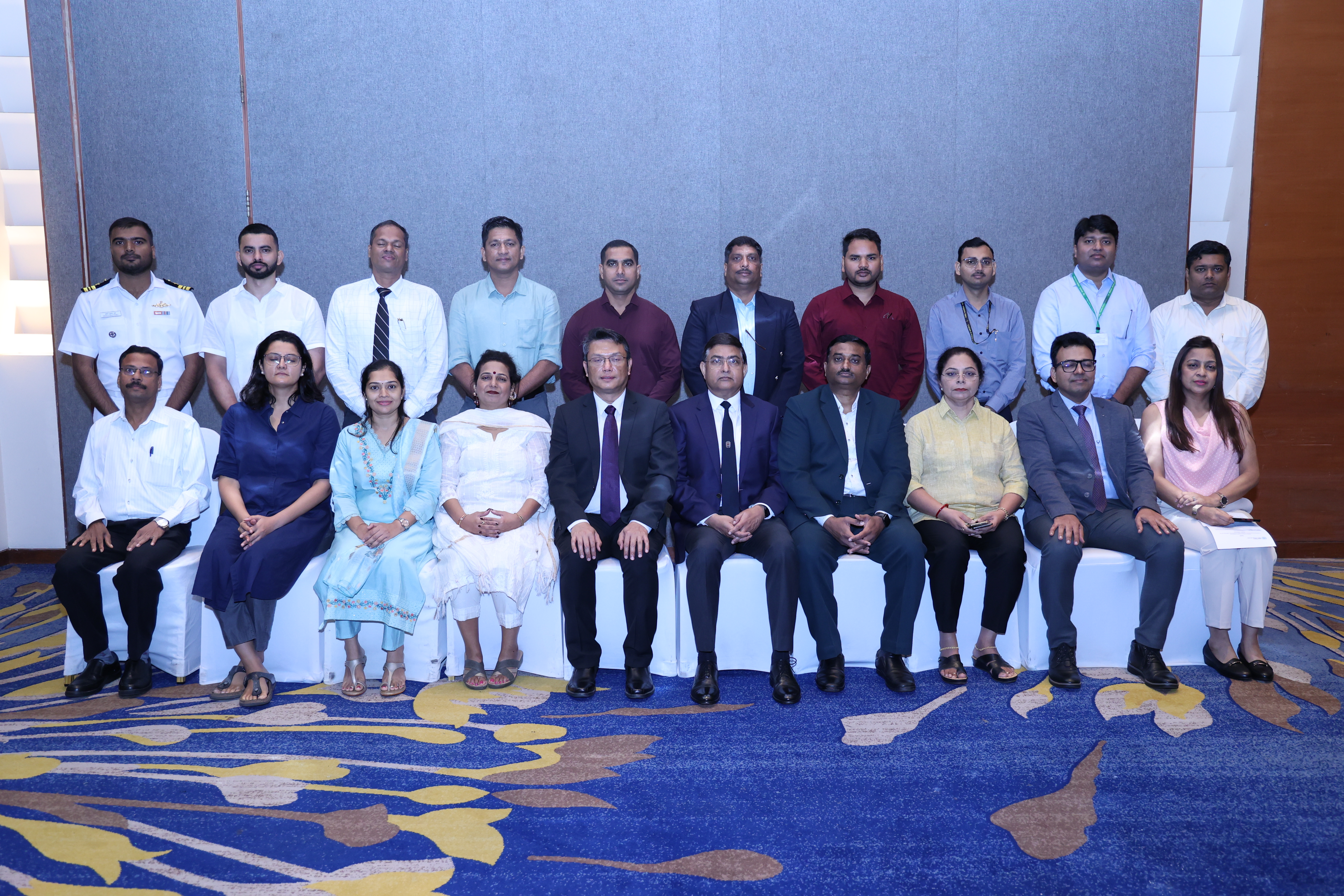
Responding to this, UNODC’s SMART Forensics programme equips frontlines officers and forensic experts with necessary knowledge, tools and skills to address and counter emerging synthetic drug threats based on scientific evidence. As part of this initiative, UNODC, with support from the United States Government convened 40 experts from law enforcement and border control agencies, drug analysis laboratories, and stakeholders from the pharmaceutical and chemical industry from Gujarat, Madhya Pradesh, Maharashtra and Goa in India to strengthen awareness and coordination against synthetic drug threats.
Officials from Indian customs, law enforcement agencies, drug law enforcement expert Dr. Jayant Misra, Dr. Rizwana Quraishi and Dr. Shalini Singh from the National Drug Dependence and Treatment Centre and UNODC Programme Manager and expert Mr. Tun Nay Soe and Ms. Seema Joshi Arya, criminal justice expert led the hands-on discussions.
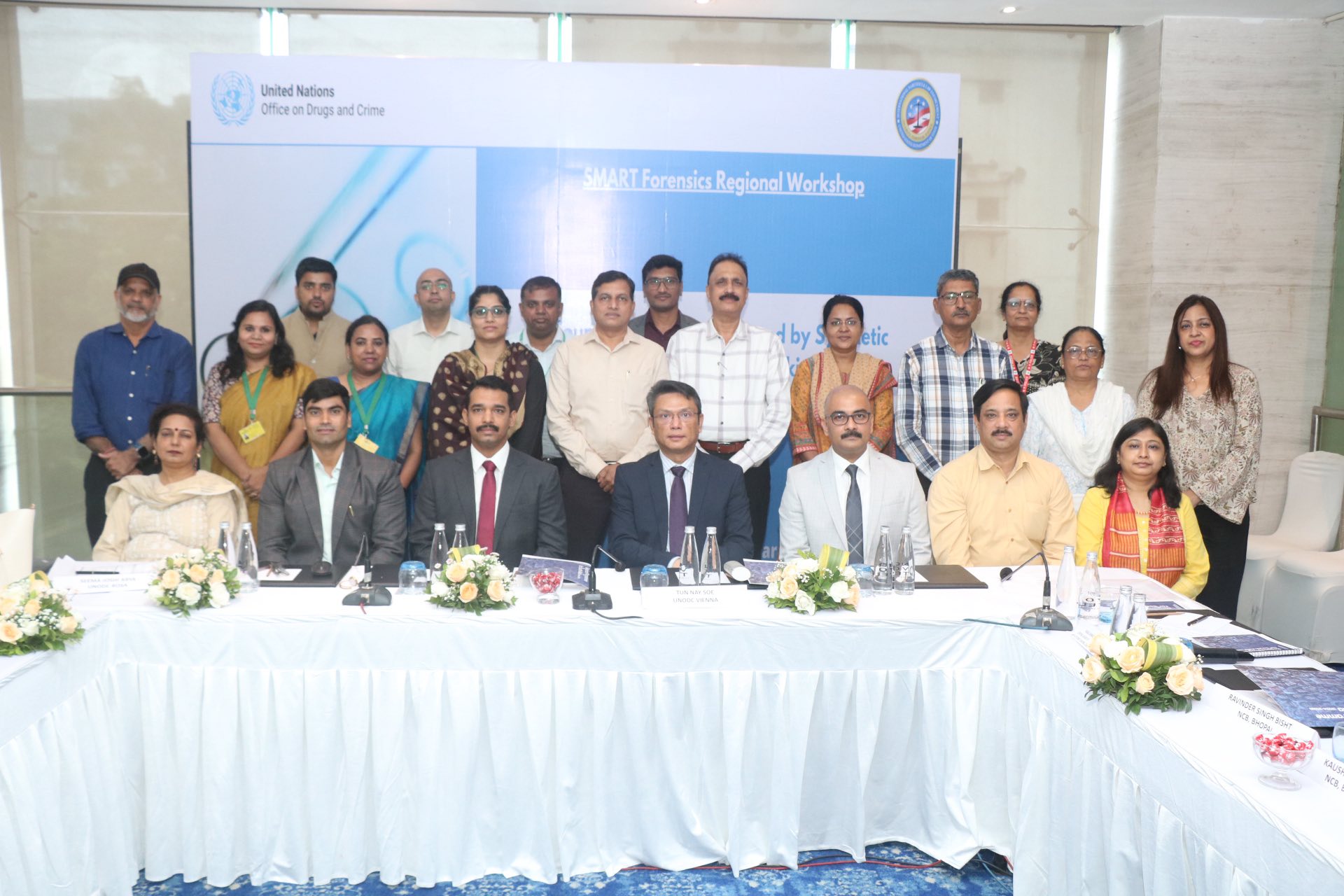
In Ahmedabad, practitioners exchanged insights on emerging trafficking trends, detection and identification challenges, regulatory frameworks, cross-border case studies and inter-regional cooperation. They were also introduced to practical tools such as the UN Synthetic Drugs Toolkit and the Early Warning Advisory, and reflected on issues pertaining to precursor control and the management of synthetic drug use. For participants, the exchange was not about abstract policy but about real tools and shared solutions they could carry back to their agencies.
In Mumbai, experts from law enforcement, border agencies, forensic labs, and the chemical and pharmaceutical industries emphasized the need for bridging gaps between science and enforcement, between regulation and practice and between regions and countries. Veteran officials such as former Director General of the Narcotics Control Bureau Mr. Rakesh Asthana underlined how traffickers are shifting rapidly to synthetics, and why modern legal frameworks and technology must form the backbone of responses.
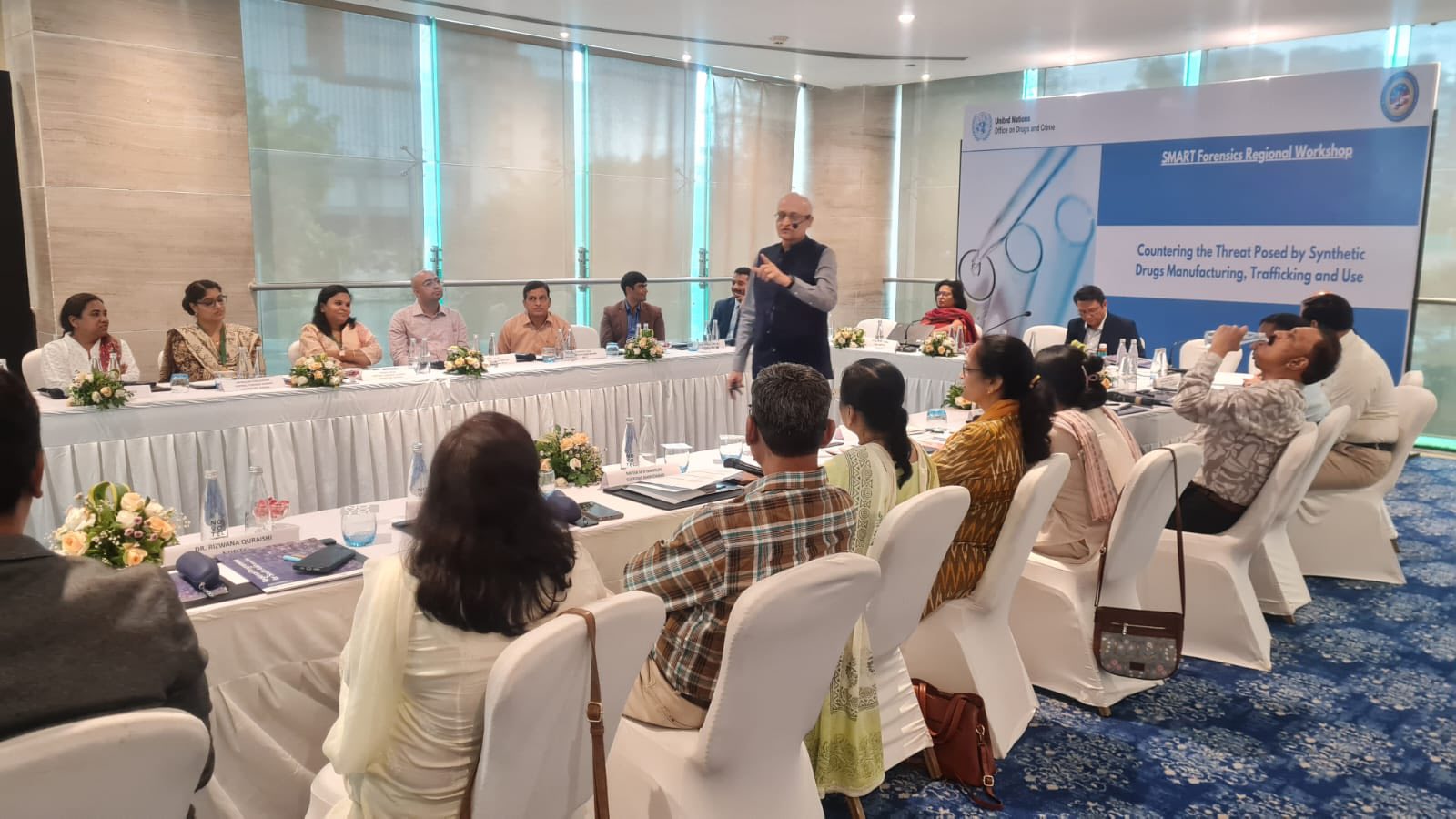
Participants left with a clearer picture of trafficking trends, the regulatory gaps traffickers exploit, and the science behind identifying new psychoactive substances. The workshops also helped participants map out options for response, from improving detection and data-sharing to tightening precursor controls.
As the guardian of the UN Convention against Transnational Organized Crime (UNTOC) and the three International Drug Control Conventions, UNODC is mandated to collaborate with Member States in the fight against illicit drugs and international crime and to address regional transnational organized crime challenges in a comprehensive and integrated manner.
This activity contributed to SDG 16 and SDG 17: https://sdg-tracker.org/
(Supported by the United States Government)