Millions of people around the world are currently facing an unprecedented global crisis stemming from the rapid global spread of the novel coronavirus disease (COVID-19)— described by the World Health Organisation as a ‘pandemic’.COVID-19 has spread to 200 countries, areas or territories with cases. Some estimates suggest that 40-70 per cent of the world’s population could become infected in due course.
In South Asia, all member states have reported confirmed cases, with the maximum number in India. Given the relentless exponential growth rate witnessed in other countries, the exponential spread of the virus in the South Asian region is inevitable, experts say, posing severe socio-economic risks.
Responding to COVID-19 is a test of societies, of governments, of communities and of individuals. Health emergencies like COVID-19 threaten to cost many lives and pose additional risks to the global economy, social dynamics, human rights, and overall security and stability of nations.Global solidarity and cooperation are imperative to address COVID-19 and to mitigate unintended but dangerous effects of measures designed to halt its spread.
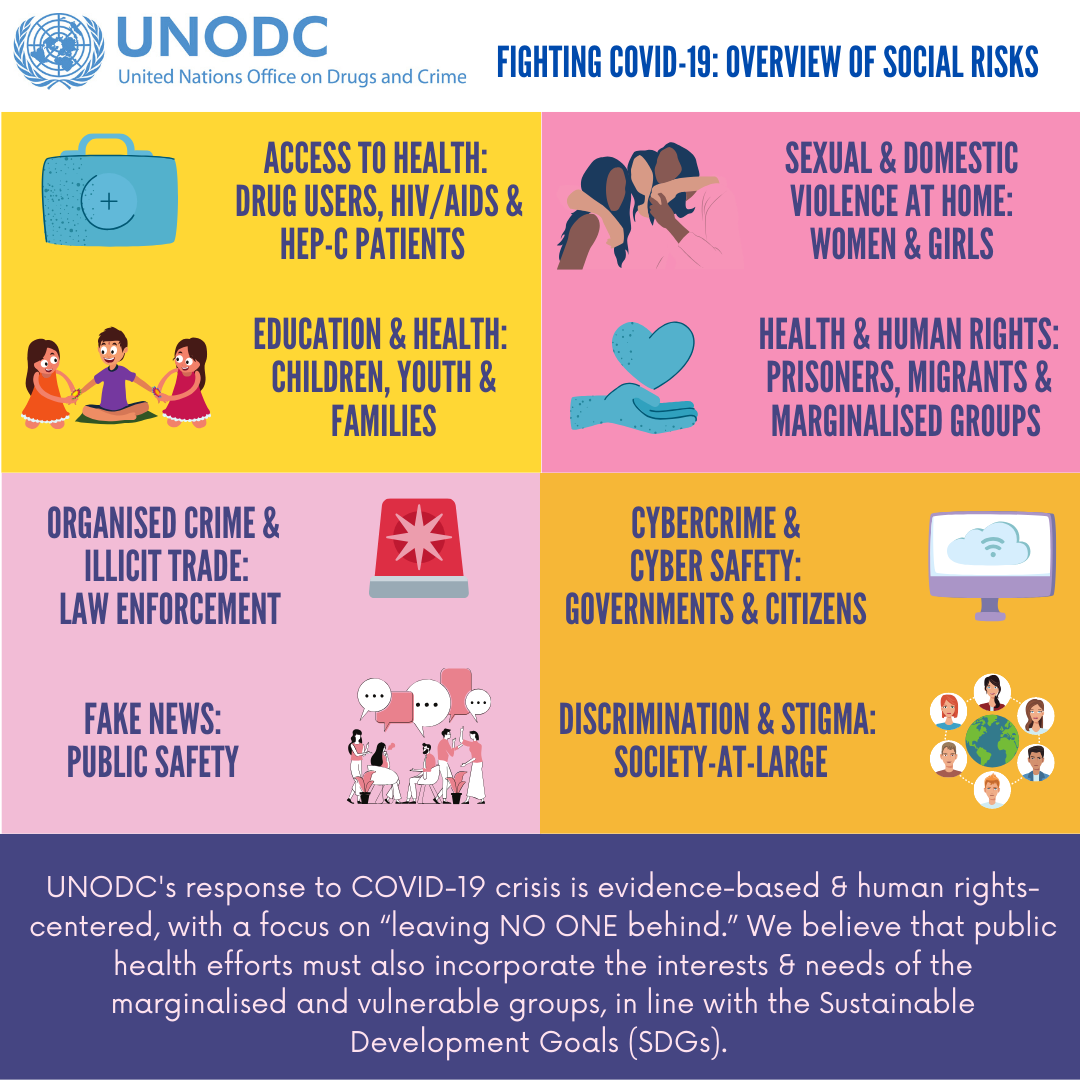
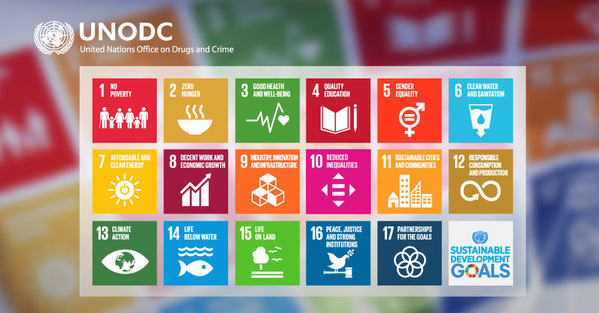
In these challenging and unprecedented times, UNODC believes that the crisis cannot be overcome until the pandemic is addressed in all pockets of vulnerability, in line with the UN’s principle of ‘Leaving No One Behind’ and the Sustainable Development Goals (SDGs). Our focus is also on the evolving implications of COVID-19, especially pertaining to human rights, health, peace, security and the rule of law. UNODC remains committed to delivering vital evidence-based and gender-responsive technical assistance to those in need, especially the marginalized, vulnerable and disadvantaged groups. These include people who use drugs and with drug use disorders, who are in prison and who have HIV/Hepatitis C.
Public health responses must incorporate within them inviolable respect for human rights across the spectrum, including economic, social, civil and political rights, and “leave no one behind,” especially the marginalised, vulnerable and economic disadvantaged groups. As the United Nations Secretary-General António Guterres has stated: “COVID-19 is menacing the whole of humanity – and so the whole of humanity must fight back. Individual country responses are not going to be enough. We must come to the aid of the ultra-vulnerable – millions upon millions of people who are least able to protect themselves. This is a matter of basic human solidarity. It is also crucial for combating the virus. This is the moment to step up for the vulnerable.”
COVID-19 reminds us how crucial it is to work together – across borders, sectors and generations, to overcome the global challenges we face. In a world of dramatic changes and measures around the world to fight the corona pandemic, we need collective action more than ever before.
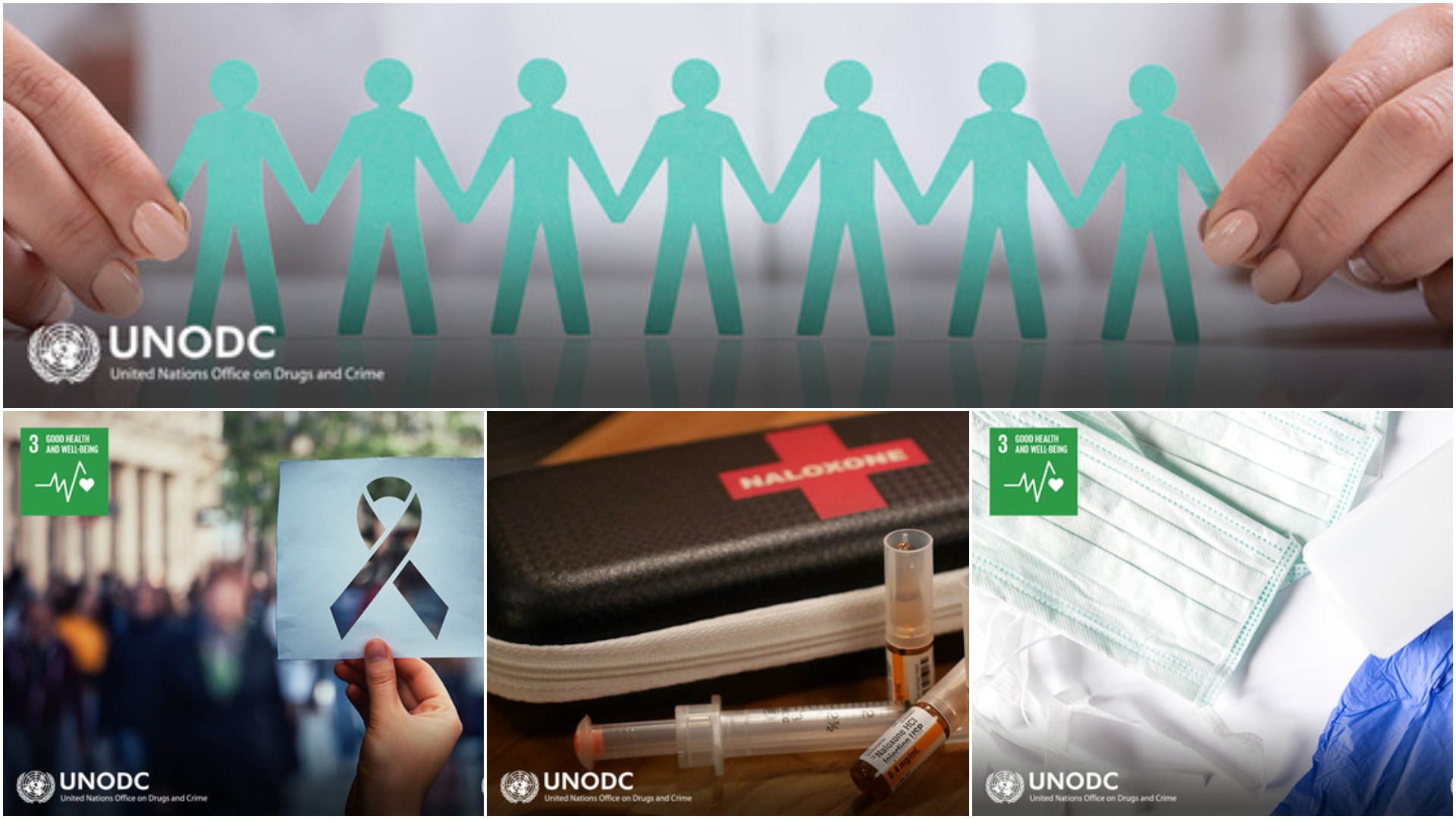
UNODC and Covid-19: https://www.unodc.org/unodc/en/covid-19.html
About the Coronavirus disease (COVID-19): www.un.org/en/coronavirus
Wellbeing tips for UN Personnel: www.un.org/en/coronavirus/wellness
Coronavirus disease (COVID-19) outbreak: www.who.int/emergencies/diseases/novel-coronavirus-2019