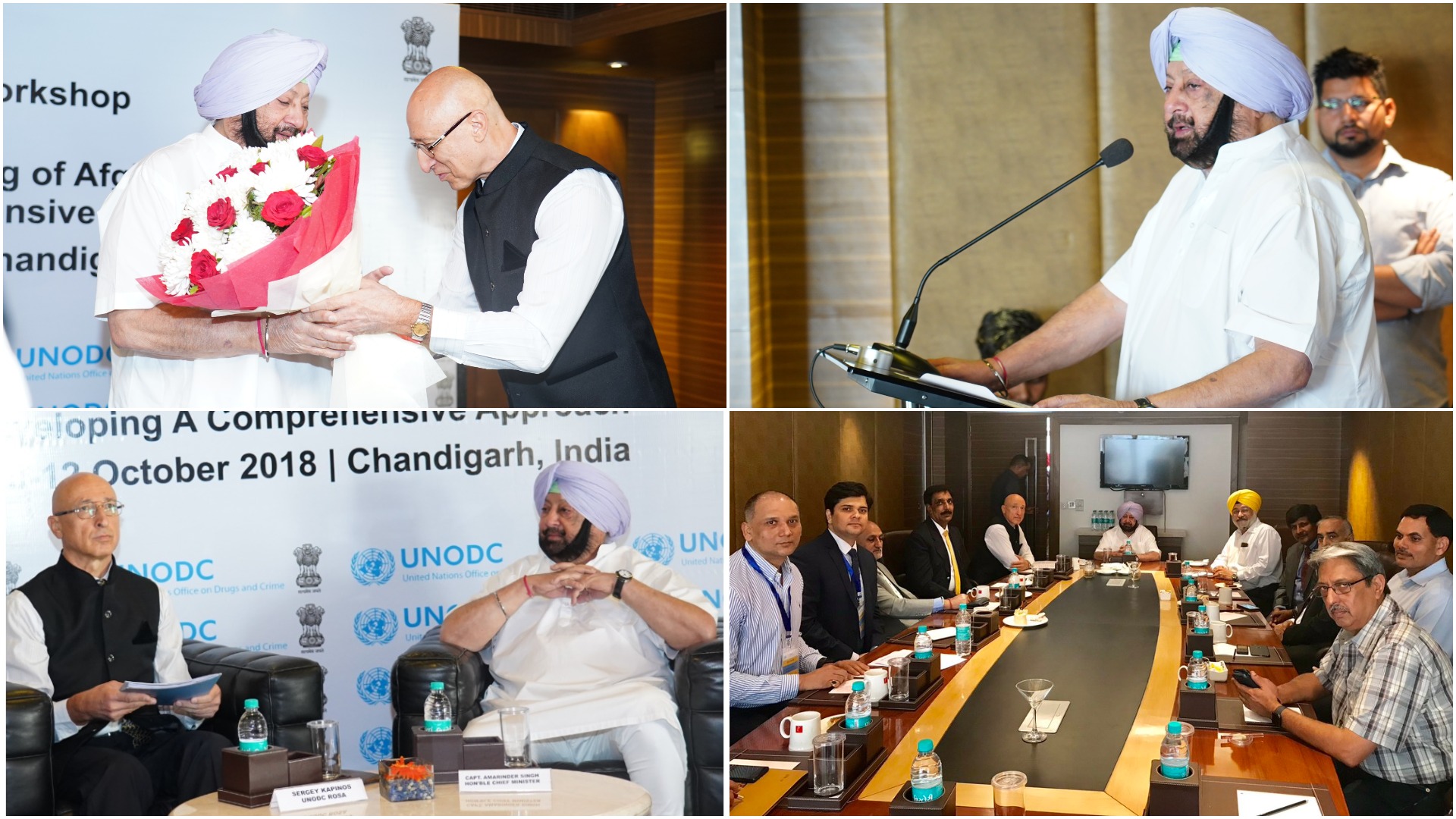
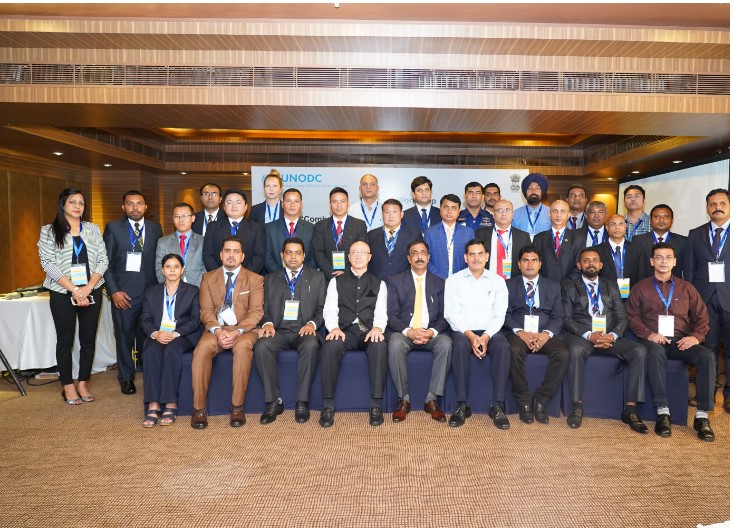
New Delhi/October 18, 2018: Responding to the illicit trafficking of opiates from Afghanistan, a three-day regional workshop was convened in Chandigarh, India last week to sensitise South Asia's top law enforcement agencies on the issue and foster collective action.Supported by the Department of Revenue, Government of India, the consultation was attended by over 25 officials from Bangladesh, Bhutan, India, Maldives, Nepal and Sri Lanka, besides international experts from UNODC Vienna, UNODC Afghanistan and UNODC's Global Maritime Crime Programme.
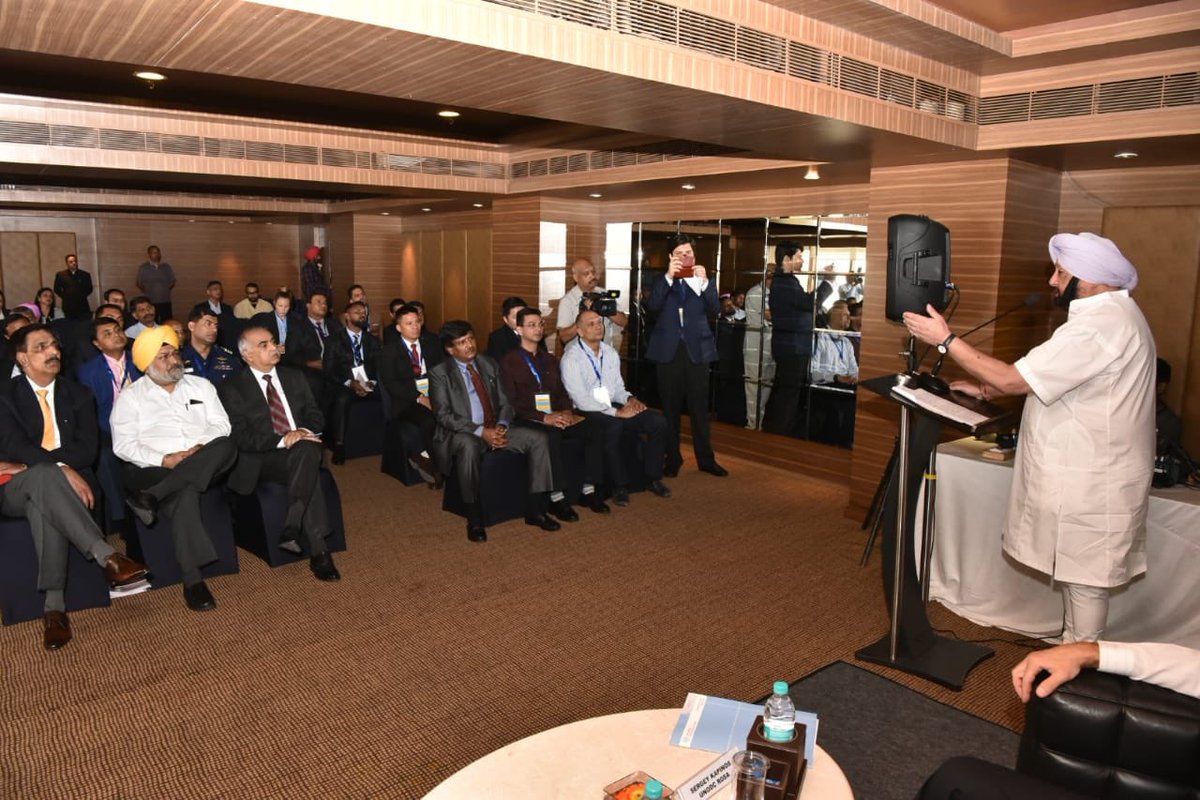 In his inaugural address to the delegates, Honourable Chief Minister of Punjab (India), Captain Amarinder Singh, called for collaborative efforts to address the drug crisis in the State, and emphasised the pivotal role of UNODC in providing technical assistance and bringing different stakeholders together.
"The recent seizure of drugs from Gujarat and Kashmir, which was to be brought to Punjab, points to the fact that smugglers from across the border are targeting the youth in north India, who contribute two-thirds manpower to the Indian defence forces," the Chief Minister stated.
"UNODC can help in identifying the big sharks that had a stake in the drug business. While the Punjab Special Task Force and other agencies have been successful in catching mid-level peddlers, the big suppliers need to be apprehended too," the Chief Minister added.
 As per UNODC's Afghanistan Opium Survey 2017, opium poppy cultivation in 2017 increased to an unprecedented record high of 328,000 hectares from an estimated 201,000 hectares in 2016 (an increase by 63%).
It is estimated that 7,600-7,900 tons of opium produced in 2017 were potentially available for producing some 550-900 tons of heroin of export quality. The consequential increase in trafficking of opiates to different parts of the world and availability of increased amount of funds in the hands of several insurgent groups active in the region pose a serious challenge to law enforcement community worldwide.
While a bulk of the Afghan opiates are smuggled out of the country via the 'Balkan Route' and the 'Northern Route', significant amounts of Afghan heroin is also smuggled to South Asia and other destinations via the 'Southern Route'. Traffickers of Afghan opiates use all available modes of transportation for trafficking, namely, air, maritime, mail and land route to transfer these opiates across the globe.
 Highlighting the need for stronger coordination and information sharing between law enforcement agencies, Mr. Sergey Kapinos, Representative, UNODC Regional Office for South Asia, said, "South Asia is both a transit and destination point for Afghan opiates. This has serious security implications for the region. It is a well established fact that drugs are directly linked to the financing of crime and terrorism." Mr. Kapinos and UNODC South Asia's Communications Officer, Samarth Pathak, also called on the Chief Minister of Punjab and senior government and law enforcement officials to discuss ways to jointly address the drugs problem.
The workshop was part of UNODC's ongoing regional project to strengthen drug law enforcement capacities in South Asia. Participants engaged in in-depth discussions, shared experiences and exchanged concrete ideas on developing a joint action framework to address the issues.
The key themes discussed in the workshop included country-specific briefs with regard to drug abuse and trafficking; the importance and efficacy of existing bilateral and regional cooperation mechanisms between Member States; and the role of customs administrations in preventing drug trafficking, among others. Delegates also shared their experiences and challenges faced in countering the smuggling of drugs from the sea, land as well as air routes.
Key Takeaways:
Key Challenges:
Key Recommendations:
Media Coverage: